
September 17, 2026 - Coaching Business
How to Scale Your Coaching Business
What does it take to grow beyond one-on-one sessions? Here’s a practical guide on how to systemize & scale your coaching business.

How to Scale Your Coaching Business
Running a coaching business well requires more than great coaching. Without the right systems, an all-in-one coaching platform, and marketing strategies that consistently generate leads, even the most talented coaches hit a ceiling they can't coach their way out of.
The good news is that the ceiling is structural, not permanent, and the right infrastructure is what breaks it.
This guide walks through exactly what those systems look like, how to build them step by step, and how to scale without sacrificing the quality that got you here.
Why Most Coaching Businesses Hit a Ceiling
There's a pattern I've seen hundreds of times talking to coaches across niches and countries: A coach builds momentum, fills their calendar, starts earning well, then everything stalls.
Not because their skills plateaued or demand dried up, but because the business was built entirely around them.
When you're the one coaching, scheduling, following up on leads, and chasing invoices, you've made yourself the bottleneck.
That's the ceiling most coaches hit, and it has nothing to do with talent. The ones who break past it have stopped treating systems as an afterthought and started building a practice that doesn't require them to make every single decision.
The Core Systems Every Coaching Business Needs to Scale
Client Onboarding System
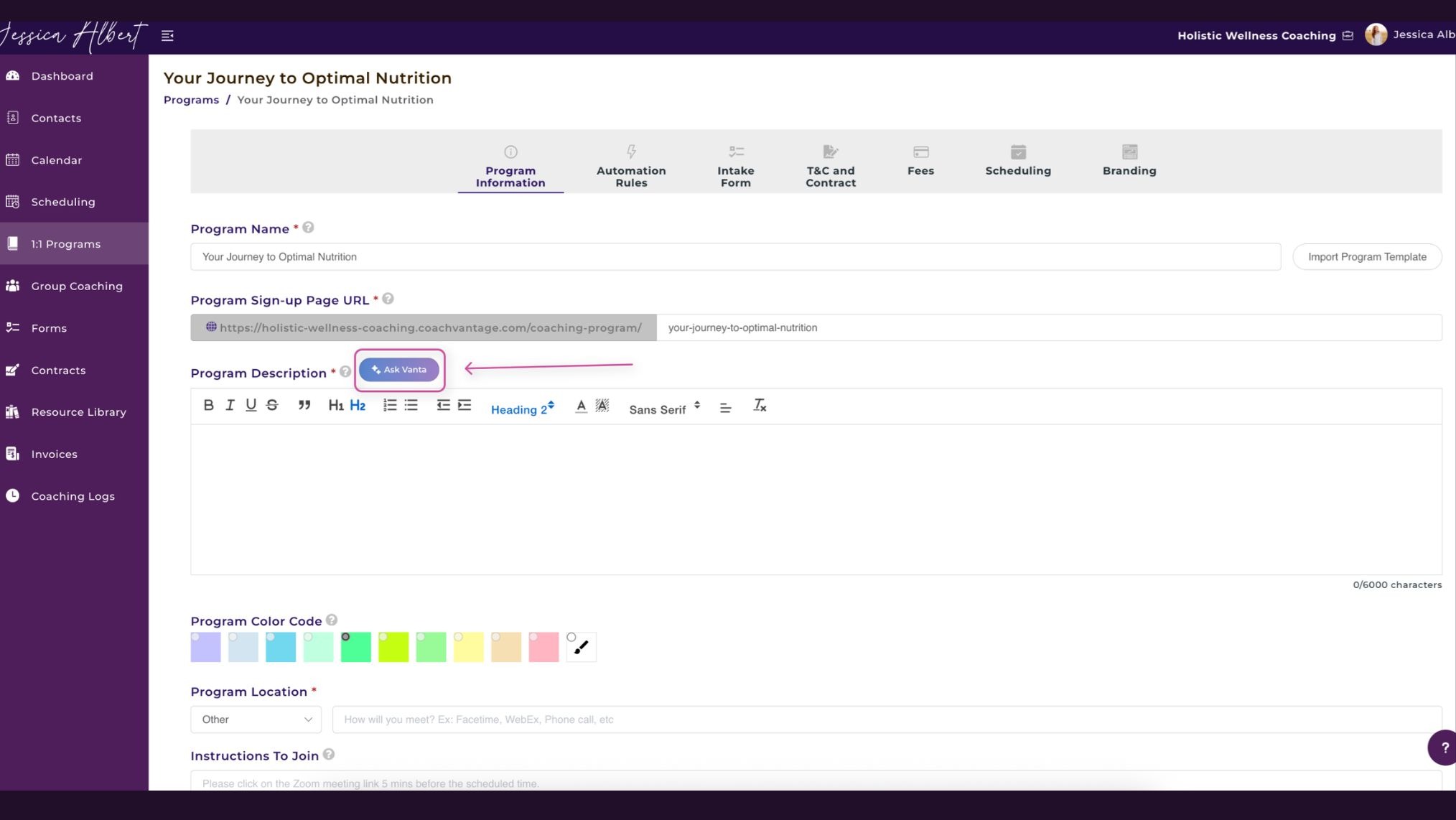
A poor onboarding experience can cost you a client before the real work begins.
A strong system covers contracts, intake forms, the welcome sequence, and first session booking, delivered without you manually sending a single document.
Every client should get the same professional experience from day one. CoachVantage connects these steps into a single workflow so nothing slips between a client signing and their first session.
Scheduling and Calendar Management
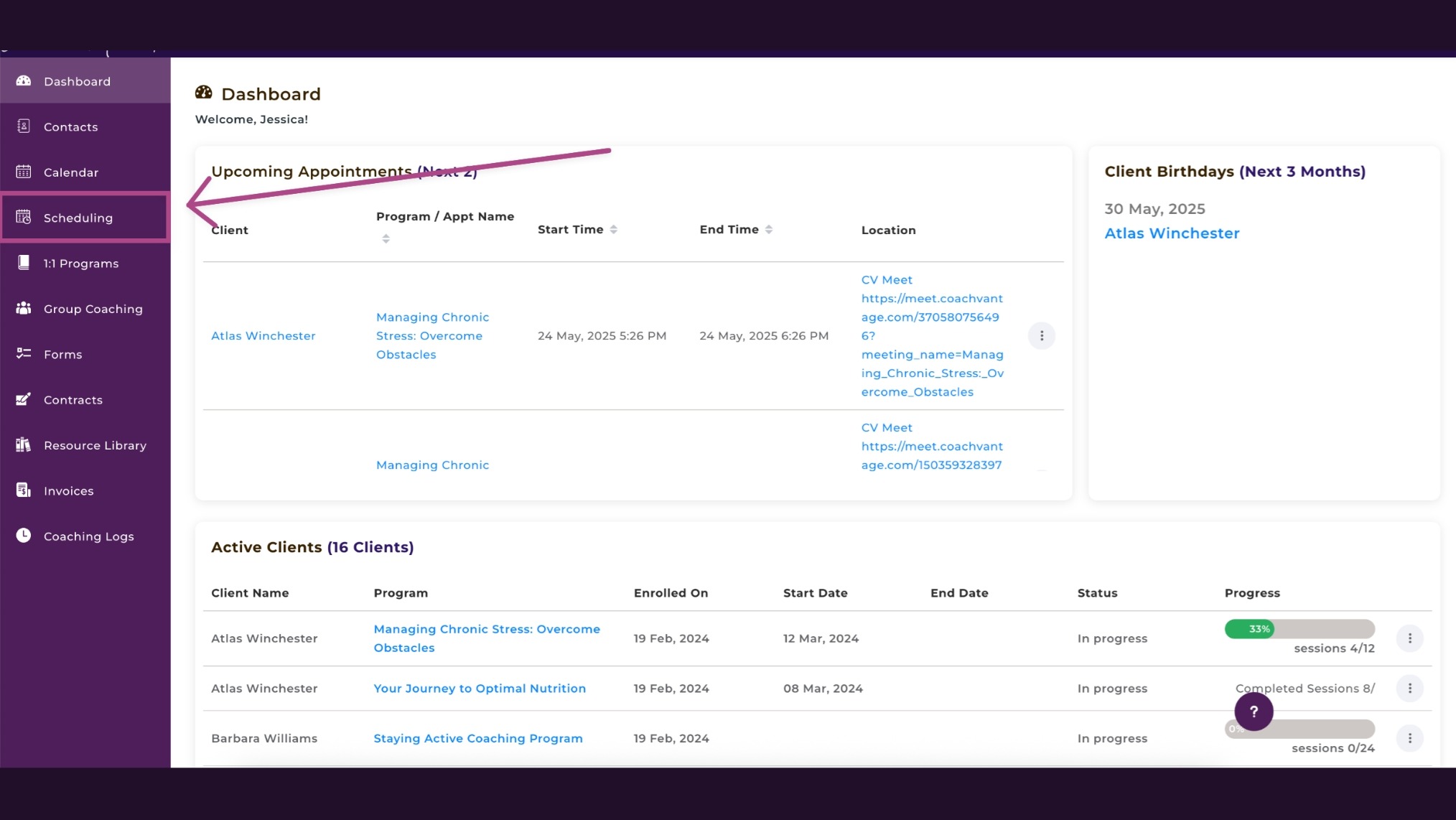
Scheduling is one of the biggest time drains in a coaching business and almost entirely avoidable.
Clients booking through a live calendar, receiving automated reminders, and rescheduling without emailing you saves hours every week.
The gain comes when scheduling lives alongside your client records rather than in a separate tool.
In CoachVantage, session history, notes, and upcoming appointments sit in the same place so context is never missing before a call.
Lead Generation and Pipeline System
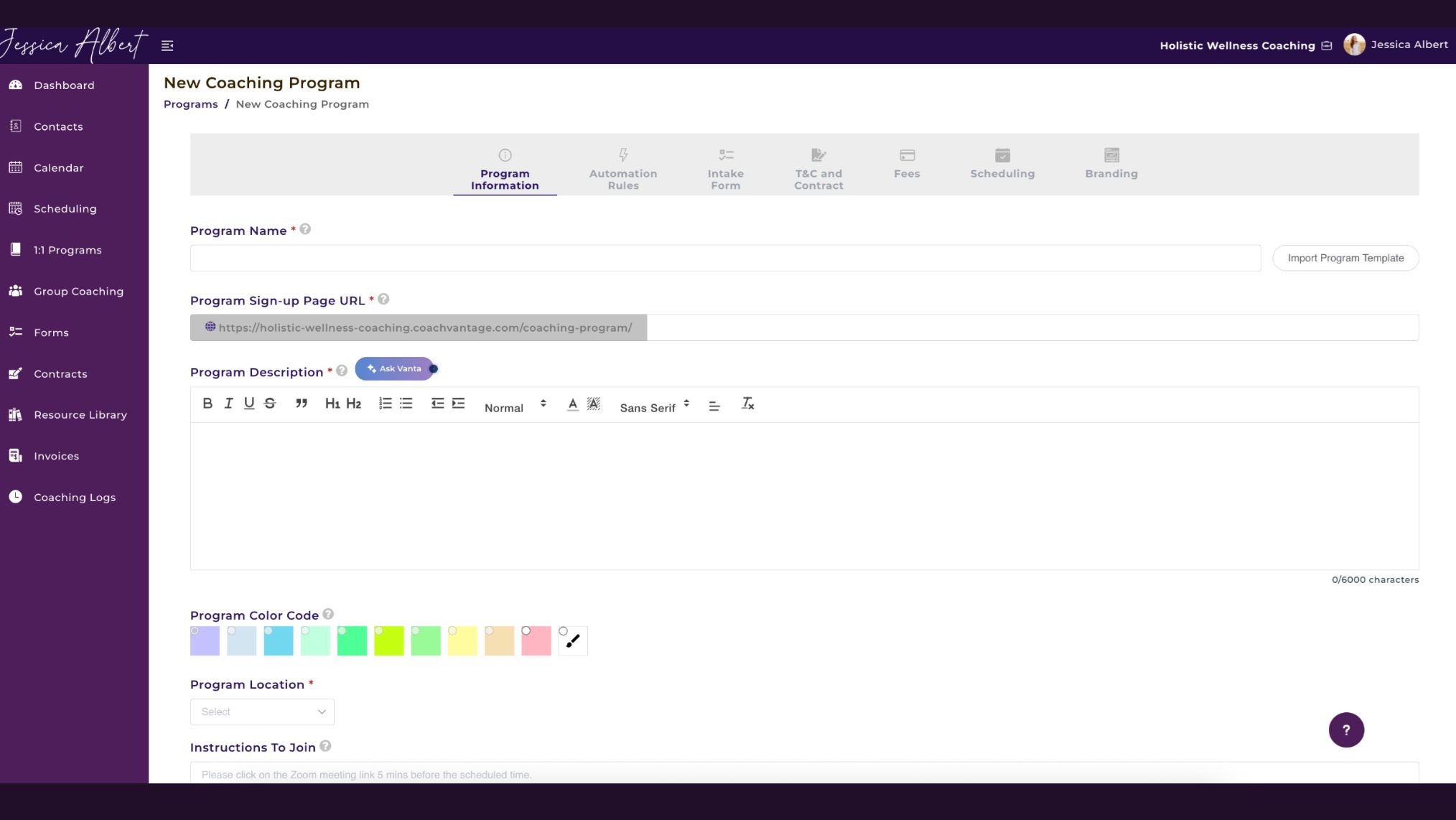
A consistent pipeline means you're never scrambling when a program ends. Lead generation needs to run continuously, not just when things get quiet.
That means a lead capture mechanism, a nurture sequence, and a way to track where each prospect stands.
Losing a warm lead because you were heads-down coaching is one of the more frustrating revenue leaks in this business.
A CRM that keeps every lead visible means follow-up happens at the right moment rather than whenever you remember.
Sales Process
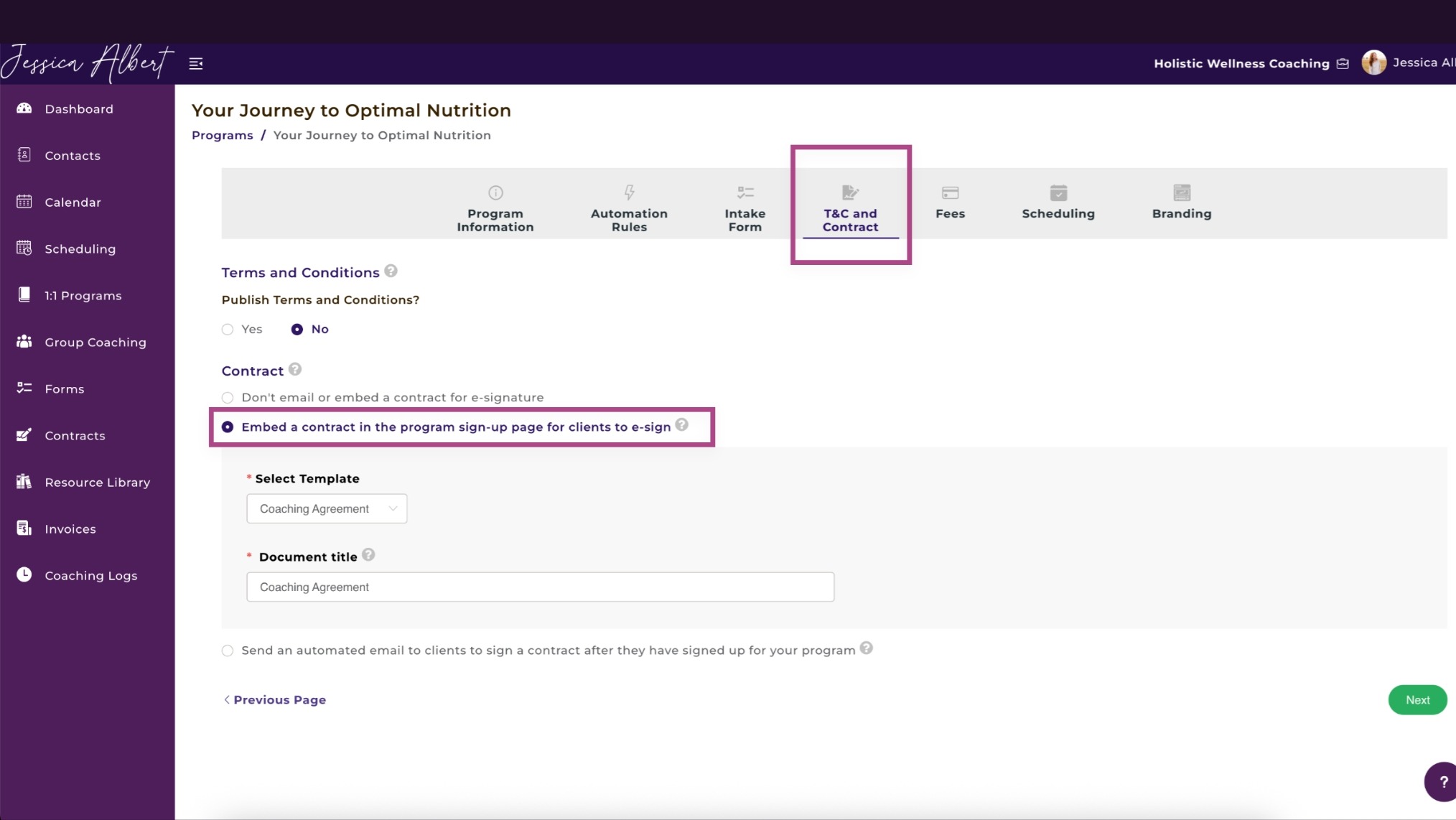
The coaches who scale consistently have a clear, repeatable path from first conversation to signed contract.
A defined sales process means you're assessing fit rather than scrambling to pitch, and follow-up happens without you needing to remember it.
Proposals and contracts that can be sent, signed, and stored in one place shorten the gap between interest and commitment considerably.
Content and Marketing System

Most coaches create content reactively, posting when they have time and going quiet when they're busy. That inconsistency creates the feast-or-famine cycle.
The reason content falls off during busy periods usually isn't a lack of ideas. It's that admin work has consumed the available hours.
The more of that load you move into automated workflows, the more consistently content gets produced without adding more to your plate.
Financial Operations and Invoicing
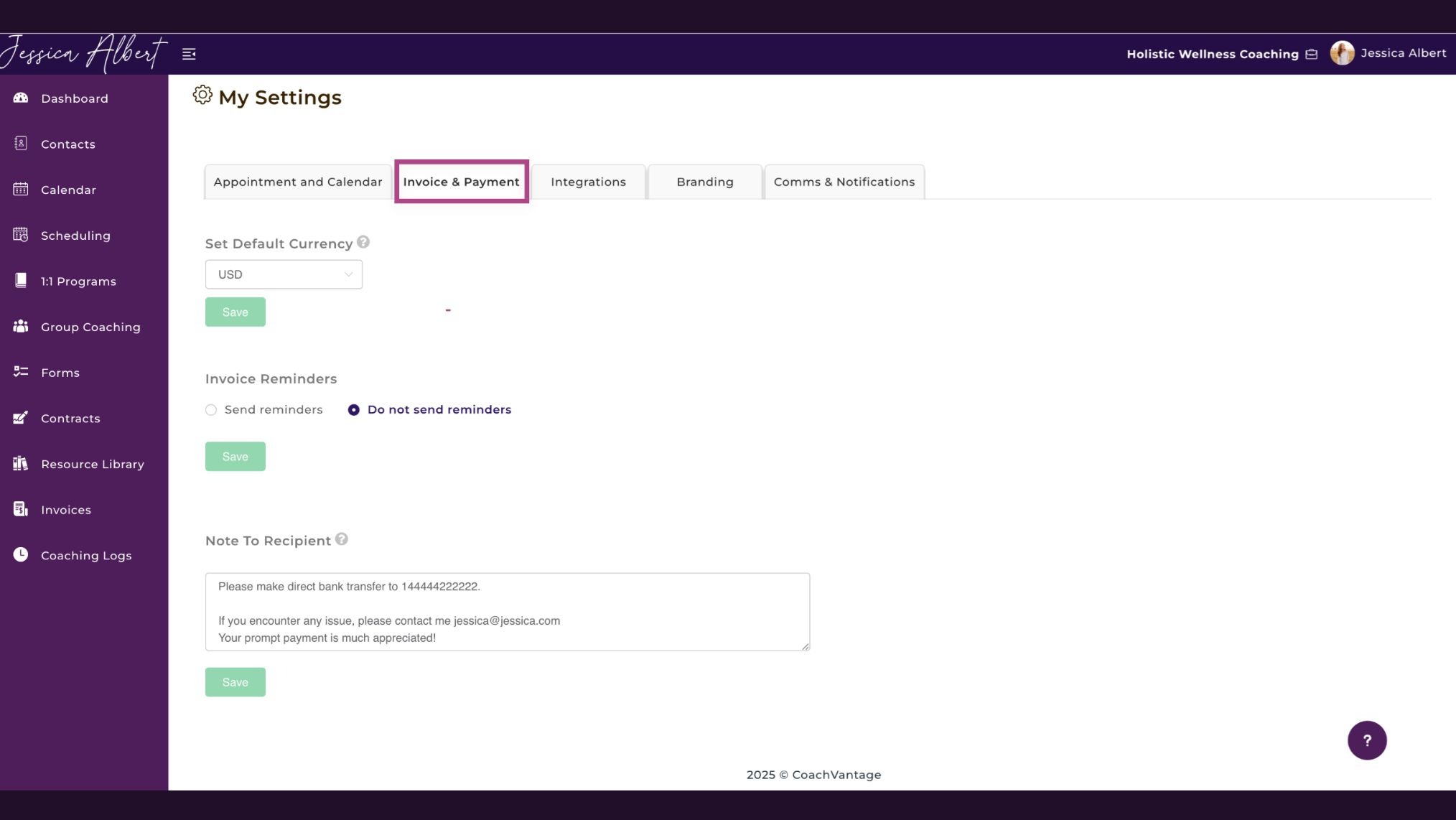
Chasing unpaid invoices and manually tracking payments is exhausting and completely avoidable.
Coaches who skip financial systemization often discover they were missing payments or unable to see what the business was actually earning.
Automated invoicing, built-in payment plans, and a single place for financial records removes that uncertainty and frees up mental energy better spent on clients.
Communication System
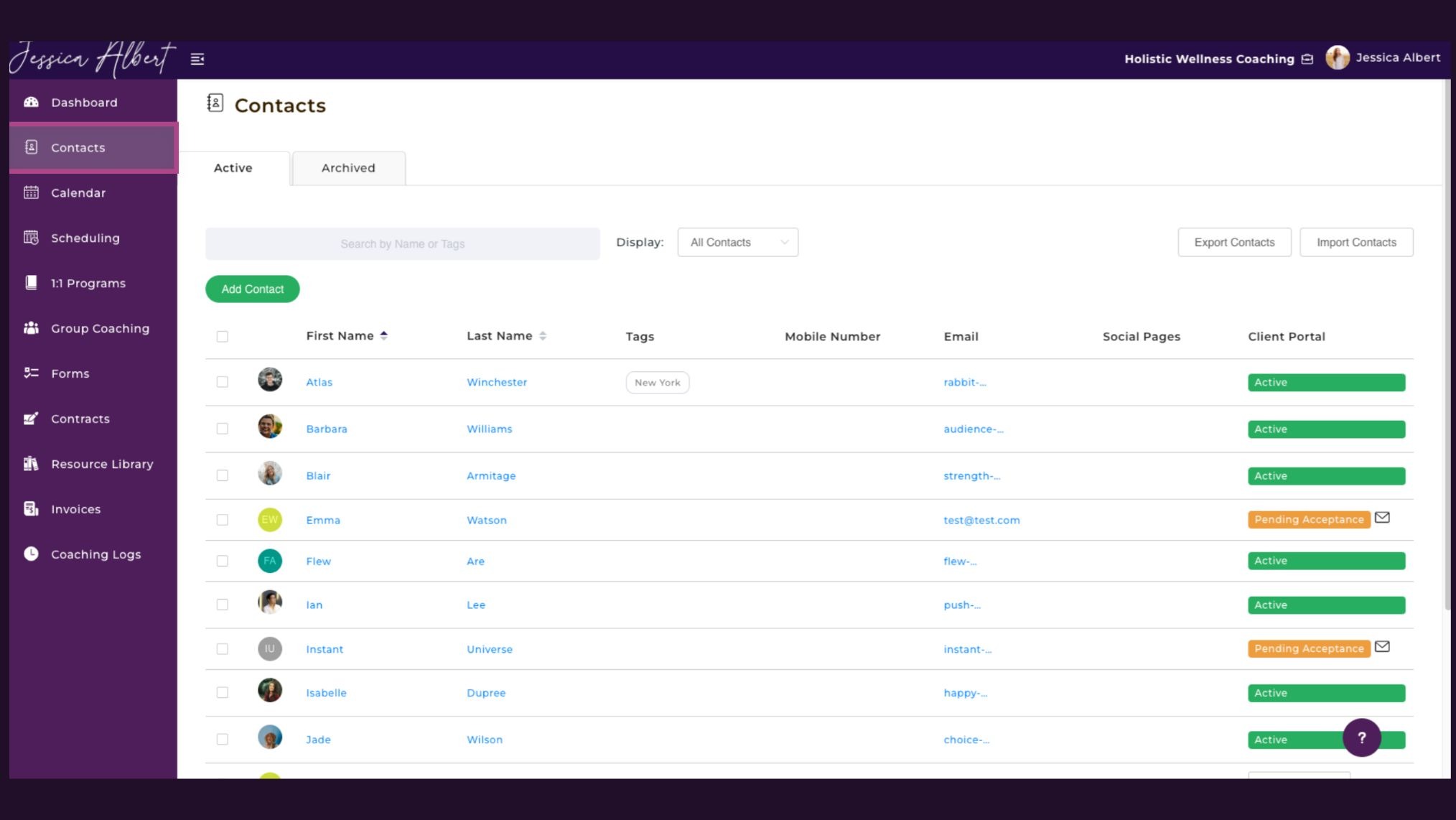
Clients messaging you across WhatsApp, email, and Instagram DMs creates a fragmented mess that's easy to lose track of.
A centralized communication system means every client knows exactly how to reach you and you're not piecing together threads from multiple platforms.
Manage Your Coaching Practice in One Place
CoachVantage automates your business workflows so you can focus on impactful coaching results.
Keeping messages, session notes, and program materials in one client workspace also protects confidentiality and keeps a clean boundary between your practice and your personal channels.
How to Systemize Your Coaching Business Step by Step

Step 1. Map Your Current Processes
Before building anything new, understand what's actually happening in your business. Spend a week tracking every recurring task, how long it takes, and where things break down.
What you'll almost certainly find is that several tasks create bottlenecks simply because they depend entirely on you. That audit is your starting point.
Step 2. Identify What Only You Can Do
Coaching, strategy, and the key moments in client relationships require you. Sending welcome emails, updating records, and chasing invoices do not.
Write down every task and honestly ask whether it requires your specific expertise. The ones that don't are candidates for documentation, delegation, or automation.
Step 3. Document and Delegate the Rest
A checklist, a screen recording, or a simple step-by-step document is enough to start. You're not writing a policy manual.
You're giving someone else enough context to handle a task consistently. Even if you're not ready to hire help yet, documenting now means you're ready when that time comes.
Step 4. Centralize Everything in CoachVantage
Scattered tools create scattered results. When contracts live in one place, invoices in another, session notes in a third, and client communication across multiple platforms, nothing runs cleanly. CoachVantage brings scheduling, contracts, client management, invoicing, and communication into a single platform built specifically for coaches, removing the daily friction of switching between tools.
Step 5. Automate What Is Repeatable
Session reminders, onboarding sequences, payment receipts, and intake form delivery all happen the same way every time.
Set them up once and they run without your involvement. The goal isn't to remove the human element from coaching. It's to protect your energy for the work that genuinely needs it.
Step 6. Review and Refine Regularly
Systems decay without attention. A focused hour every quarter reviewing your core processes is enough to catch friction points before they compound.
What worked at ten clients may not work at thirty, and staying ahead of that gap is what keeps growth from feeling chaotic.
How to Scale Your Individual Coaching Business

Move Beyond One-on-One Coaching
Pure one-on-one coaching has a hard ceiling. There are only so many hours you can coach before quality drops and burnout becomes a real risk.
Scaling past that means shifting some delivery into formats that serve more people without proportionally increasing your time, whether that's transitioning clients into group formats or creating a lower-touch offer alongside your premium work.
Add Group Coaching and Online Courses
Group coaching lets you deliver the same expertise to ten clients in a single session instead of ten separate ones.
Online courses package your methodology into a self-paced format that generates revenue independently of your calendar, reaching people who aren't ready for one-on-one programs yet and widening your top of funnel considerably.
Build Evergreen Offers and Digital Products
Evergreen offers sell year-round without a launch event every time. Templates, frameworks, and pre-recorded trainings built around problems your clients consistently bring to sessions become reliable revenue streams running quietly in the background. If the same challenge comes up across multiple engagements, it's worth packaging into a product.
Hire Support Before You Need It
Most coaches wait until they're overwhelmed before hiring help. By then, onboarding someone takes twice as long because there's no time to train them properly.
Bringing on support while you still have bandwidth means the transition is smooth. Start with tasks that drain your energy but don't require your expertise.
How to Scale Coaching Across an Organization
Define the Coaching Framework
Scaling coaching beyond one practitioner requires a shared methodology that others can apply consistently. Without it, quality becomes unpredictable.
The framework should capture the methodology, session structure, shared language, and intended outcomes, giving every coach a common foundation without removing individual flexibility.
Standardize the Process Across Teams
Once the framework exists, embed it into a consistent delivery process. Standardized intake, session formats, check-ins, and reporting across all coaches mean the data you collect start revealing what drives results and where the model needs refinement. Consistency here is also what keeps quality from becoming dependent on any one individual.
Train and Equip Internal Coaches
Deploying coaching organizationally only works if the people doing it are genuinely equipped. That means training on the framework, structured practice, peer review, and tools that manage client work without creating overhead.
When internal coaches have a structured platform to document sessions and track progress, the patchwork of individual workarounds gets replaced with something consistent.
Track Progress and Measure Impact
Coaching investments need to be justified, which means you need data. A documented record of each client's journey, aggregated across a team, becomes the foundation for meaningful impact reporting.
When session notes and progress tracking are built into the platform coaches already use, documentation happens as part of delivery rather than as a separate task. That's what makes the conversation with leadership straightforward.
From Overwhelmed Coach to Scalable Practice
The coaches who scale successfully all make the same shift at some point: they stop being the single point of failure in their own business.
That shift doesn't happen overnight, but it starts with one decision to build the system rather than carry the load. Build the systems, and the practice follows.
CoachVantage is an all-in-one coaching software that comes with the core features you need to systemize and scale your business. Sign up for a free trial and start building the systems you need to scale today!
Frequently Asked Questions
What is a business coaching system?
A business coaching system is a documented, repeatable framework that handles operational tasks like onboarding, scheduling, billing, and communication consistently without requiring your manual involvement every time. The goal is predictable results regardless of how many clients you're serving.
How do I scale coaching across an organization?
Define a shared methodology, standardize delivery, and train internal coaches to apply it consistently. Tracking progress at both the individual and program level is what allows you to measure impact and refine the approach over time.
How do I know when my coaching business is ready to scale?
A clear signal is when you're regularly turning away clients or operating at full capacity. If the calendar is full but your systems are creaking, systemize first before attempting to scale.
What is the difference between systemizing and automating a coaching business?
Systemizing means documenting processes and making them repeatable. Automating is a layer within that where software handles specific recurring tasks without manual input. Automation without a clear system underneath it rarely holds together.
Which systems should I build first in my coaching business?
Client onboarding and scheduling have the most immediate impact on client experience and your time. Once those run smoothly, lead generation and financial operations are the natural next priorities.
Want More Coaching Clients?

Get Your Free Guide to Create An Irresistible Lead Magnet
And attract clients who want to work with you.
Get Your Free Guide Now
Glen Oliveiro
Founder of CoachVantage
With a pulse on the coaching industry, Glen personally engaged with hundreds of coaches to develop a platform that addresses their day-to-day challenges. A visionary entrepreneur, Glen is committed to revolutionizing coaching practices through the innovative solutions offered by CoachVantage.




.png)