
July 23, 2026 - Coaching Business
What Are the Steps in the Coaching Process?
Wondering how great coaches move clients from stuck to thriving? Here’s a step-by-step breakdown of the coaching process.

What Are the Steps in the Coaching Process?
Most coaches don't lose clients because of bad coaching, but because of a disorganized, unprofessional experience.
If you want to structure a life coaching session or a group coaching session that actually delivers results, you need a clear process, strong agreements, and an all-in-one coaching platform that holds everything together.
This guide breaks down every step of the coaching process and shows you exactly how to structure an online coaching session that keeps clients engaged, accountable, and coming back.
The Steps in a Coaching Process
Step 1. Set Up Your Coaching Platform
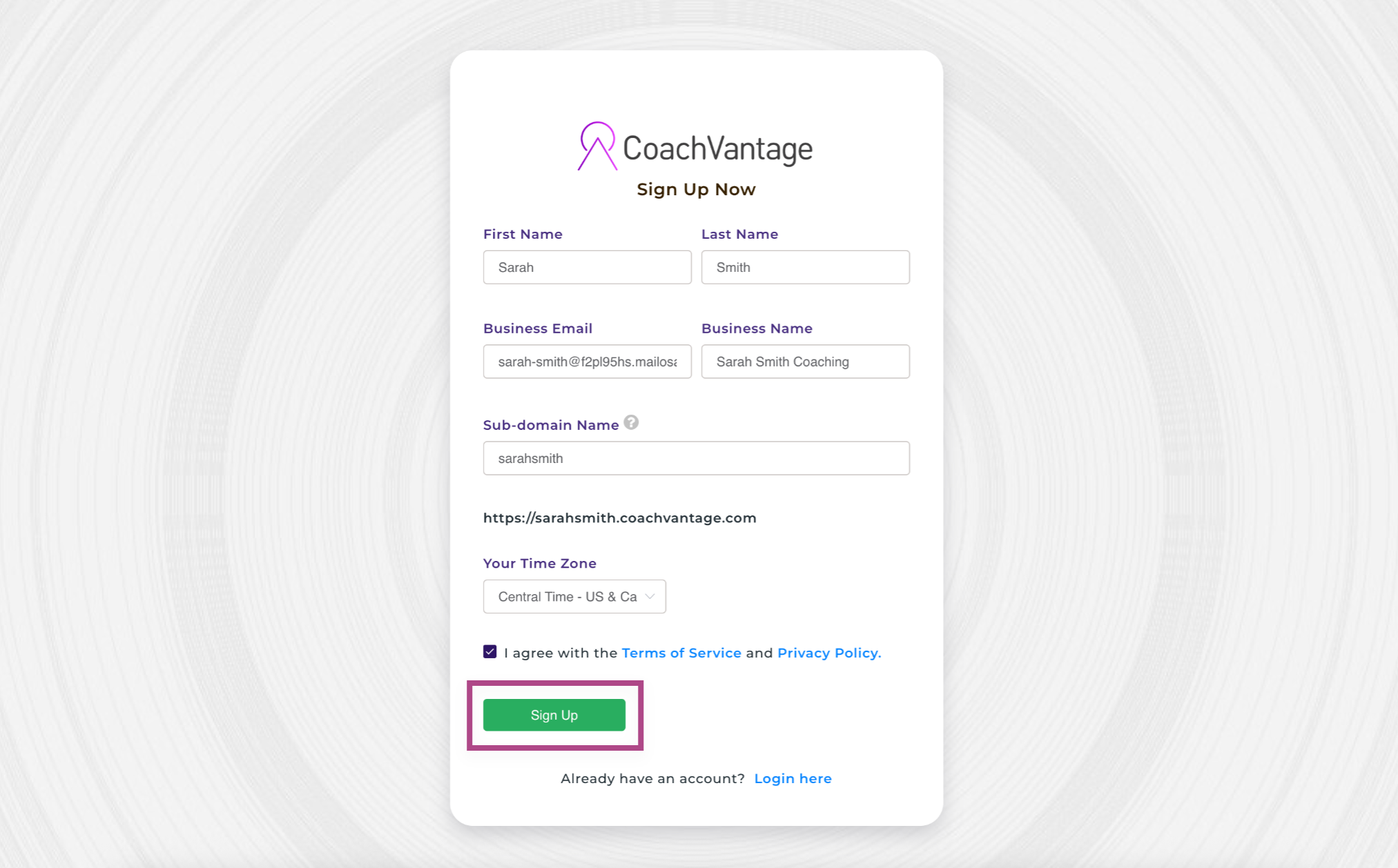
Before taking on your first paying client, get your systems in place. Without the right platform, the admin side of coaching quietly takes over: missed follow-ups, disorganized client records, contracts lost in email threads.
A good coaching platform removes that friction so you can focus on what you actually do.
Signing up for CoachVantage gives you a purpose-built environment where your calendar, client communications, programs, and payments all live together.
When you set it up once, it works in the background every time a new client comes on board.
Step 2. Initial Assessment and Discovery
Understanding the client completely comes before any goals are set. You need to know where they are right now: what's working, what isn't, what they've already tried, and what's been keeping them stuck.
Active listening matters most here, because clients don't always know how to articulate the real problem in the first conversation.
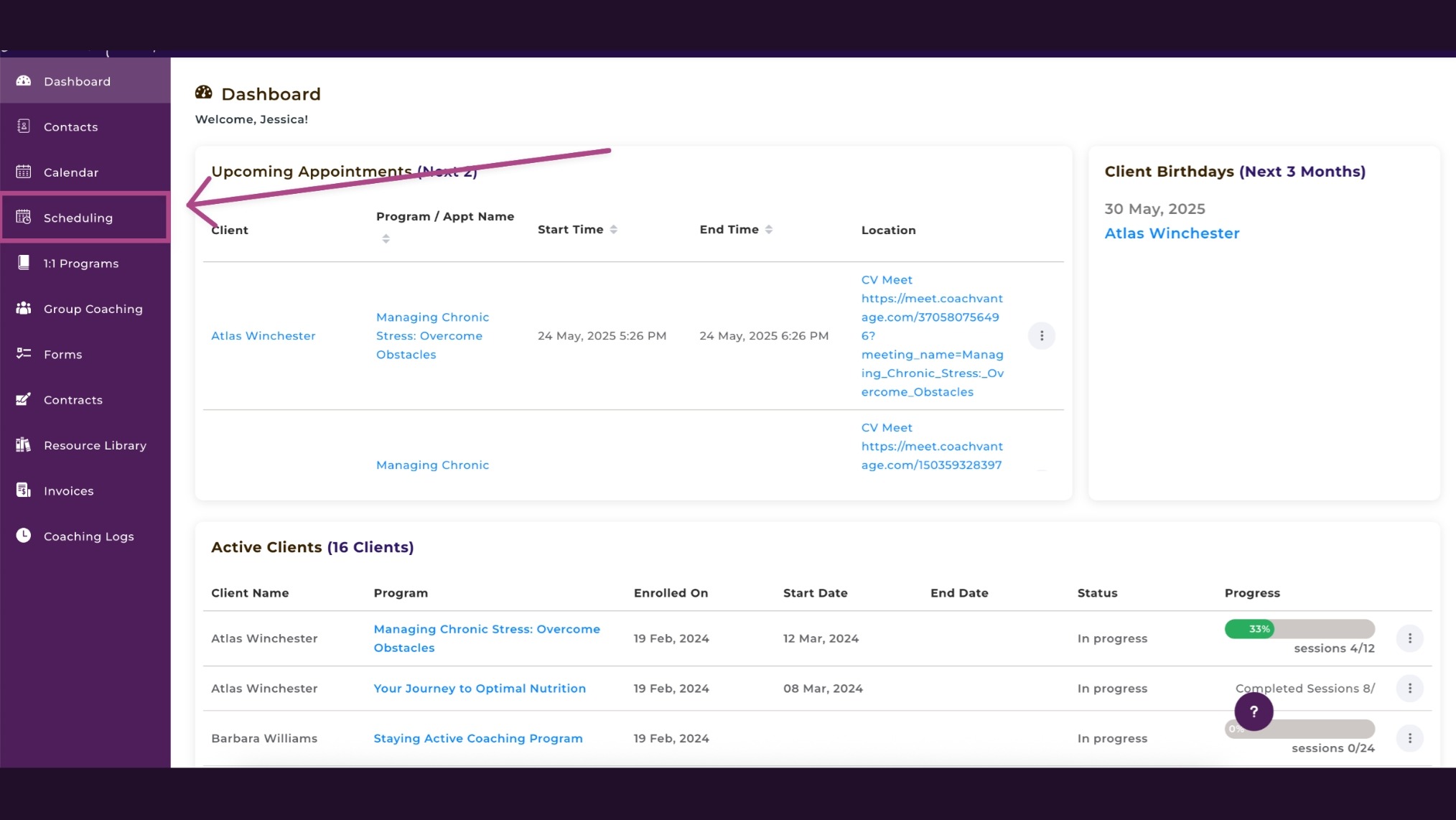
The Scheduling feature lets you create a Discovery Call booking page that prospects can use to self-schedule directly on your calendar.
Pair that with a custom intake form attached to the booking flow, and by the time the call happens, you already have context on the client before you've exchanged a single word.
Step 3. Contracting and Establishing the Coaching Agreement
The coaching agreement is the foundation of trust and clarity that the entire relationship stands on.
This is where you and your client explicitly agree on what the coaching will cover, how long the engagement will run, what's expected of both parties, and how confidentiality will be handled.
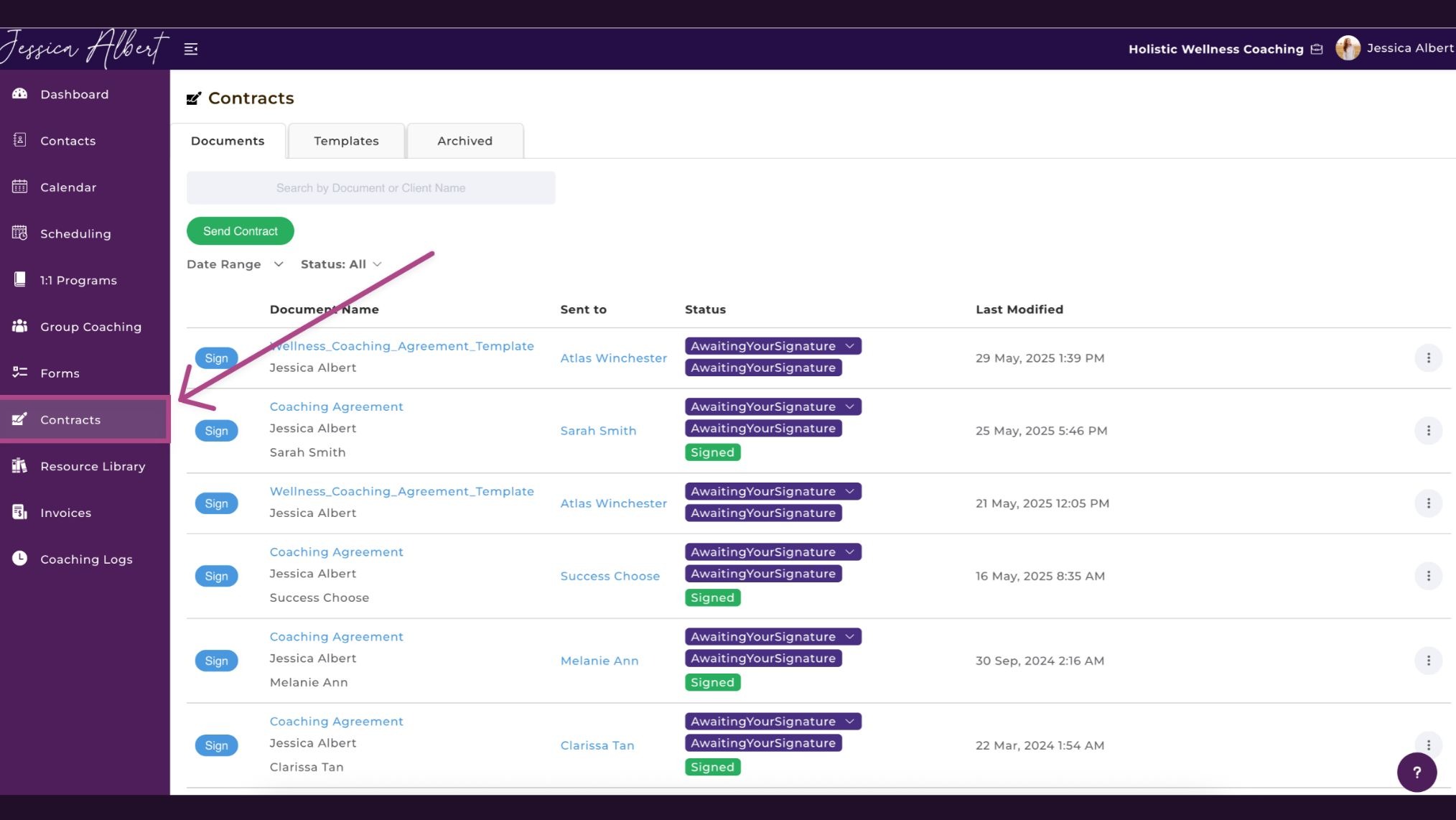
The Contracts feature handles this in its entirety. Upload your agreement as a PDF template, attach it to your program, and it goes out automatically when a client enrolls.
Clients then e-sign from their portal, and the platform tracks status, sends reminder emails if a signature is pending, and stores a full audit trail.
Step 4. Goal Setting
Once the contract is in place, you and your client work together to define goals that are specific, measurable, and meaningful.
Good goal setting is about helping the client articulate what success actually looks like for them and then building a clear roadmap toward it.
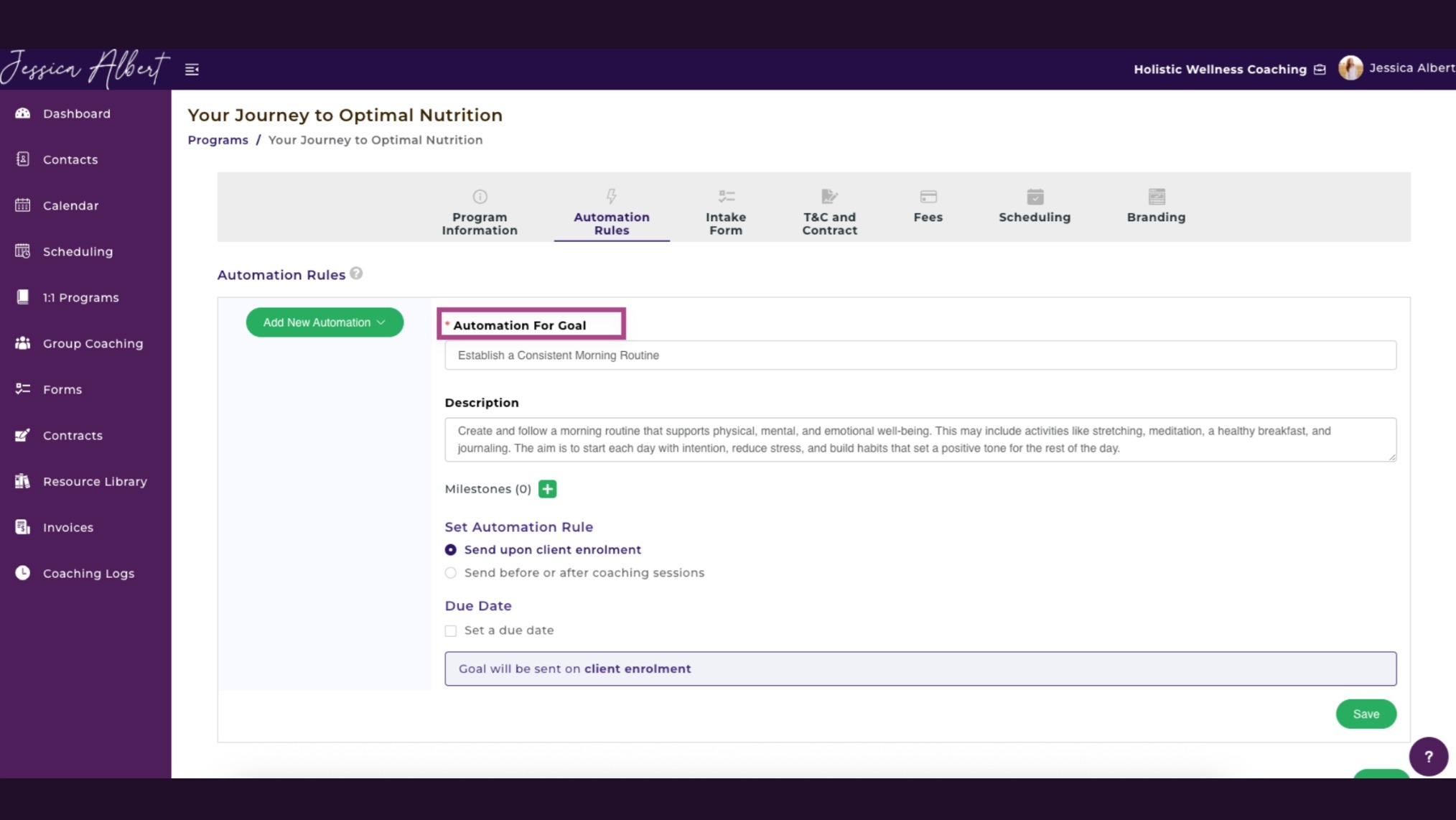
The Goals feature lets you set goals with optional milestones and due dates directly from the client's program page.
Both you and the client can update goal status from ‘Not Started’ to ‘In Progress’ to ‘Completed’, and clients track everything in real time through the client portal.
Step 5. Structuring the Coaching Sessions
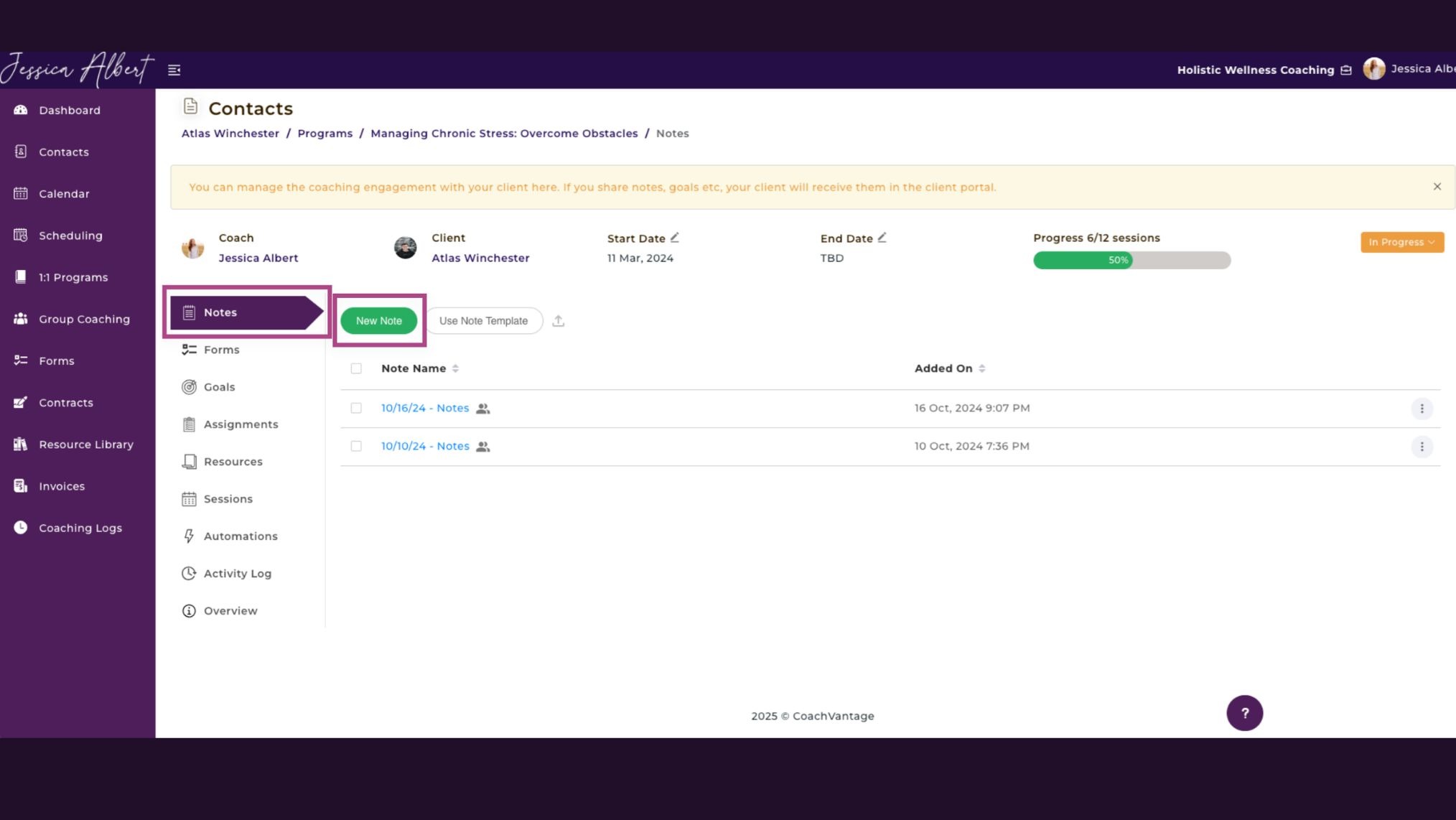
Every session needs a structure, even if that structure is flexible. Most effective coaching sessions follow a consistent flow: open with a check-in, identify what the client wants to focus on, explore obstacles, work toward insight, and close with clear commitments.
Sessions that lack structure tend to become venting sessions, which may feel helpful in the moment but rarely produces the kind of growth your clients are paying for.
Also, to maintain that structure and build on the conversations in the next session, utilize the Notes feature. It lets you capture key moments, shifts, and commitments from each session, privately or shared with the client.
Step 6. Action Planning
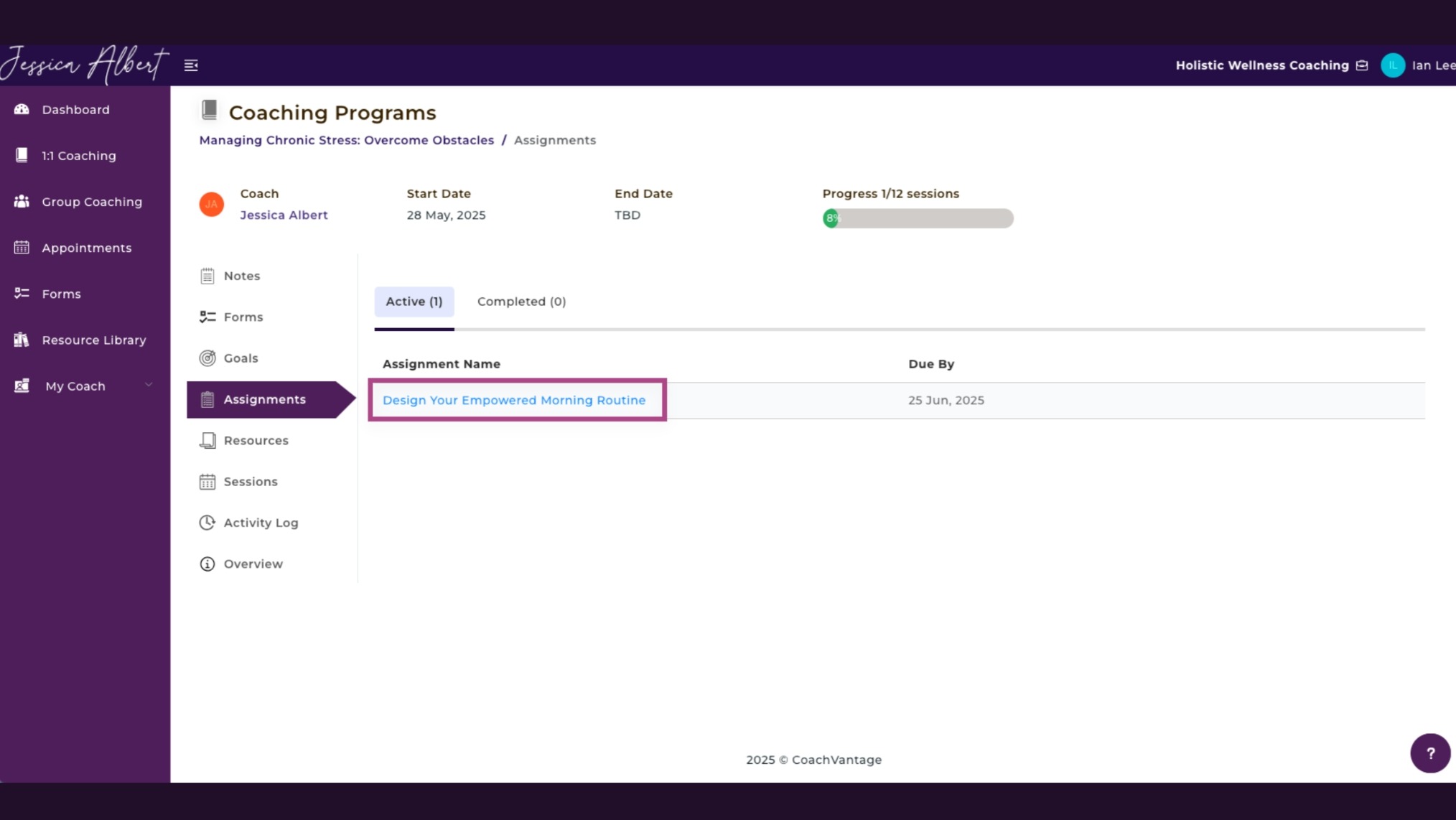
Insight without action is just self-awareness. At the end of each session, your client should walk away with at least one concrete action they've committed to completing before you meet again.
Good action plans are specific, tied directly to the client's goals, and include a clear timeline.
An Assignments feature lets you create an assignment from the client's program page, attach relevant files like worksheets or reading materials, and set a due date.
The client receives an automated notification, sees the assignment in their portal, and updates the status as they progress.
Step 7. Ongoing Support and Accountability
Manage Your Coaching Practice in One Place
CoachVantage automates your business workflows so you can focus on impactful coaching results.
Accountability is often where coaching earns its keep. It's easy for clients to commit to things in the session but real life tends to get in the way between sessions.
Checking in, following up on action items, and holding the client to what they said they wanted are all core parts of the coaching process.
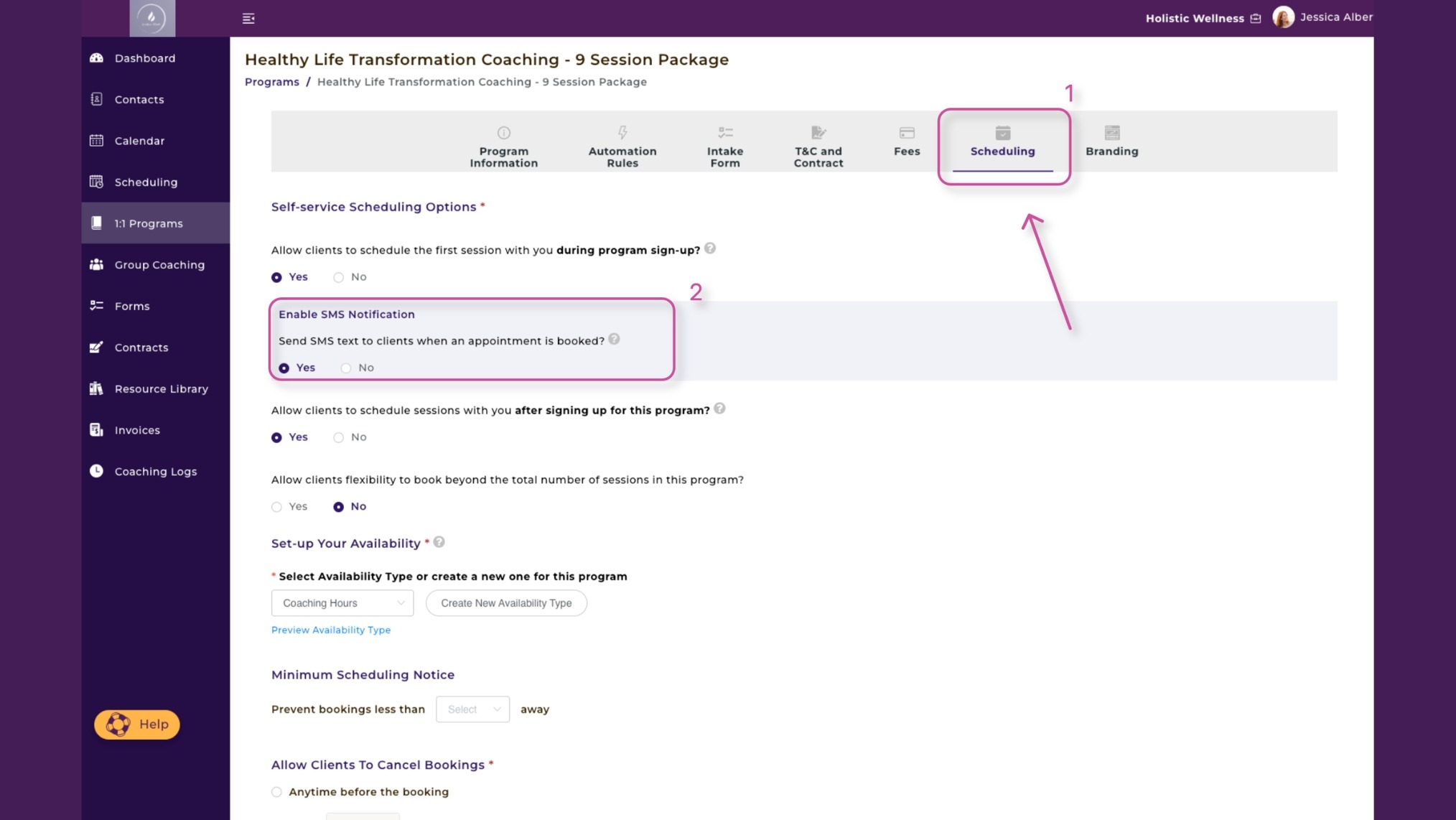
You can automate SMS appointment reminders that go out to clients' phones ahead of each session, reducing no-shows and keeping the coaching relationship front of mind.
Between sessions, the client portal keeps accountability active on the client's side too: they can check in on their goals, update assignment statuses, and revisit shared notes without waiting for you to follow up.
Step 8. Mid-Program Review and Re-contracting
Around the midpoint of a coaching program, pause and evaluate. Are the original goals still the right ones? Has the client's situation shifted? What's working and what needs adjusting?
This review matters because people change during coaching, and the engagement should change with them.
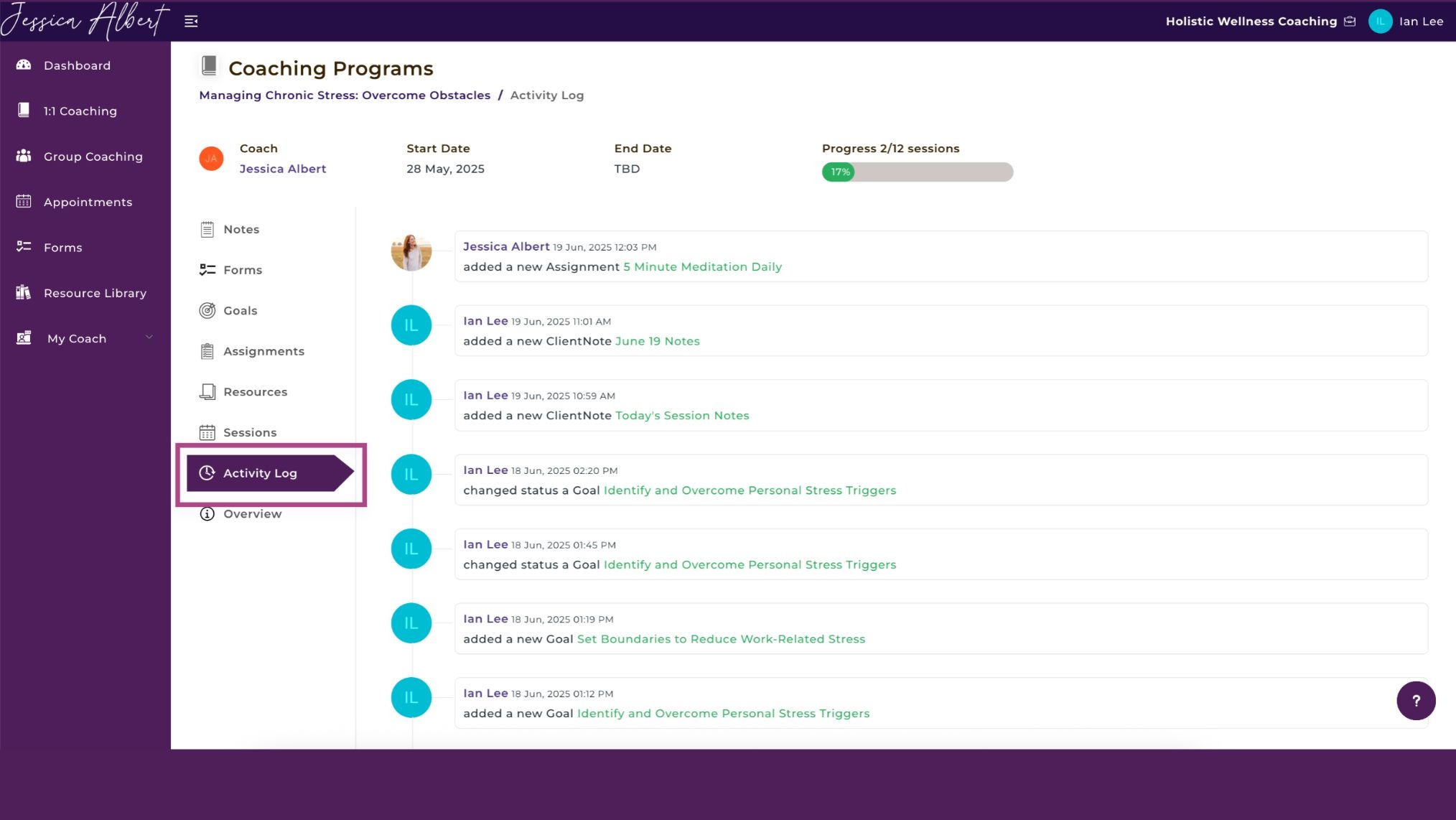
CoachVantage's Activity Log gives you a clear timeline of everything that's happened, from goals set to assignments completed to notes shared.
Pull this up before the mid-program review and you'll have a factual record to anchor the conversation. If goals need updating, edit them directly and the client sees the changes instantly.
Step 9. Reflection and Progress Evaluation
Near the end of the program, both coach and client should take time to reflect on how far the client has come.
This is not just a feel-good exercise but a critical part of learning. Clients who can clearly articulate their growth are more likely to sustain those changes after coaching ends.
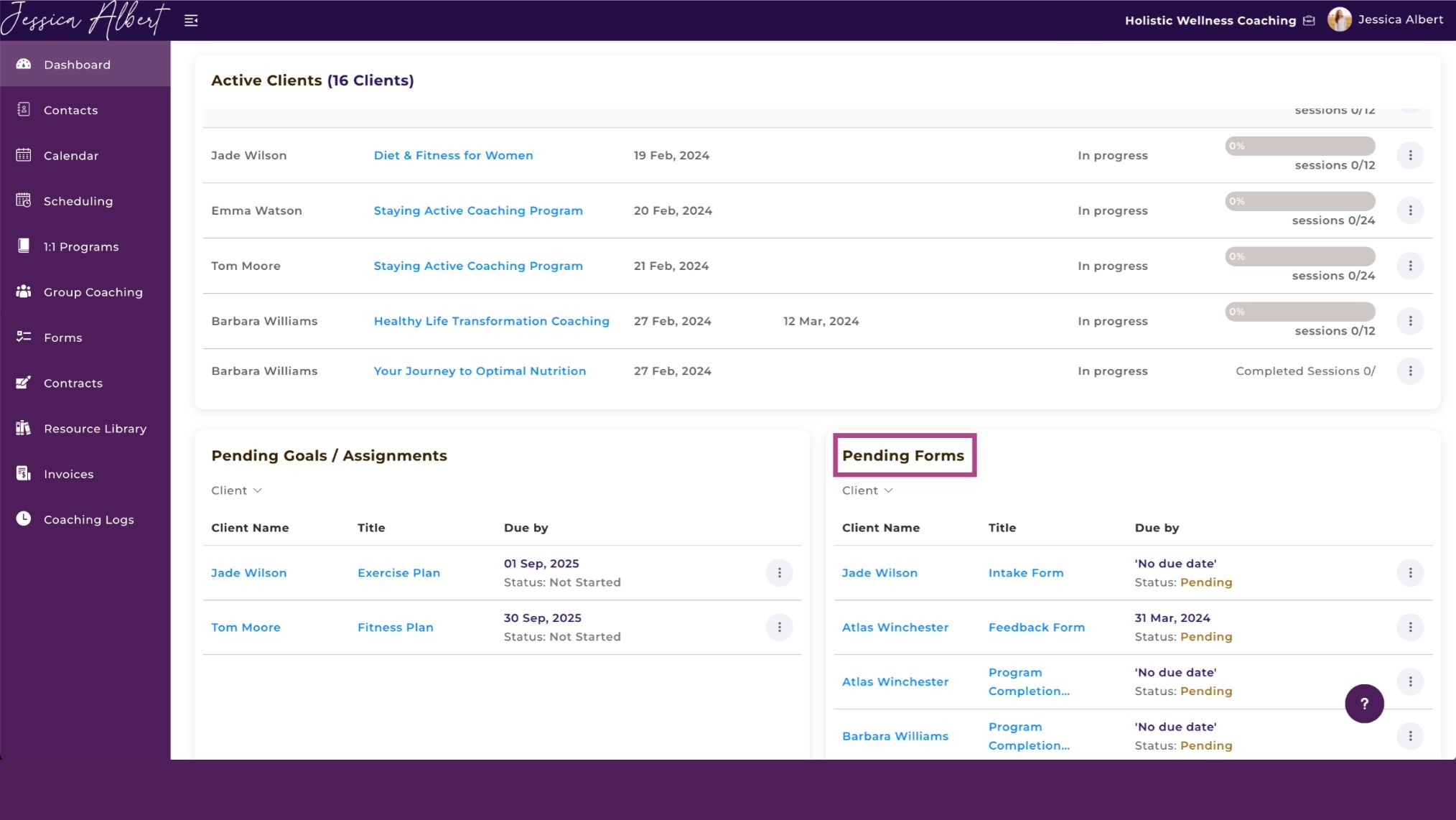
Sending a post-program feedback form through the Forms feature makes this structured and easy to revisit.
You can also review completed goals and assignments together from the client's program page, giving both of you a clear, concrete picture of what was achieved across the engagement.
Step 10. Closing the Coaching Engagement
Closing a coaching engagement well is just as important as starting it well.
A proper closure session includes a review of goals achieved, acknowledgment of the client's growth, a discussion of next steps, and clarity on what happens after the formal engagement ends.
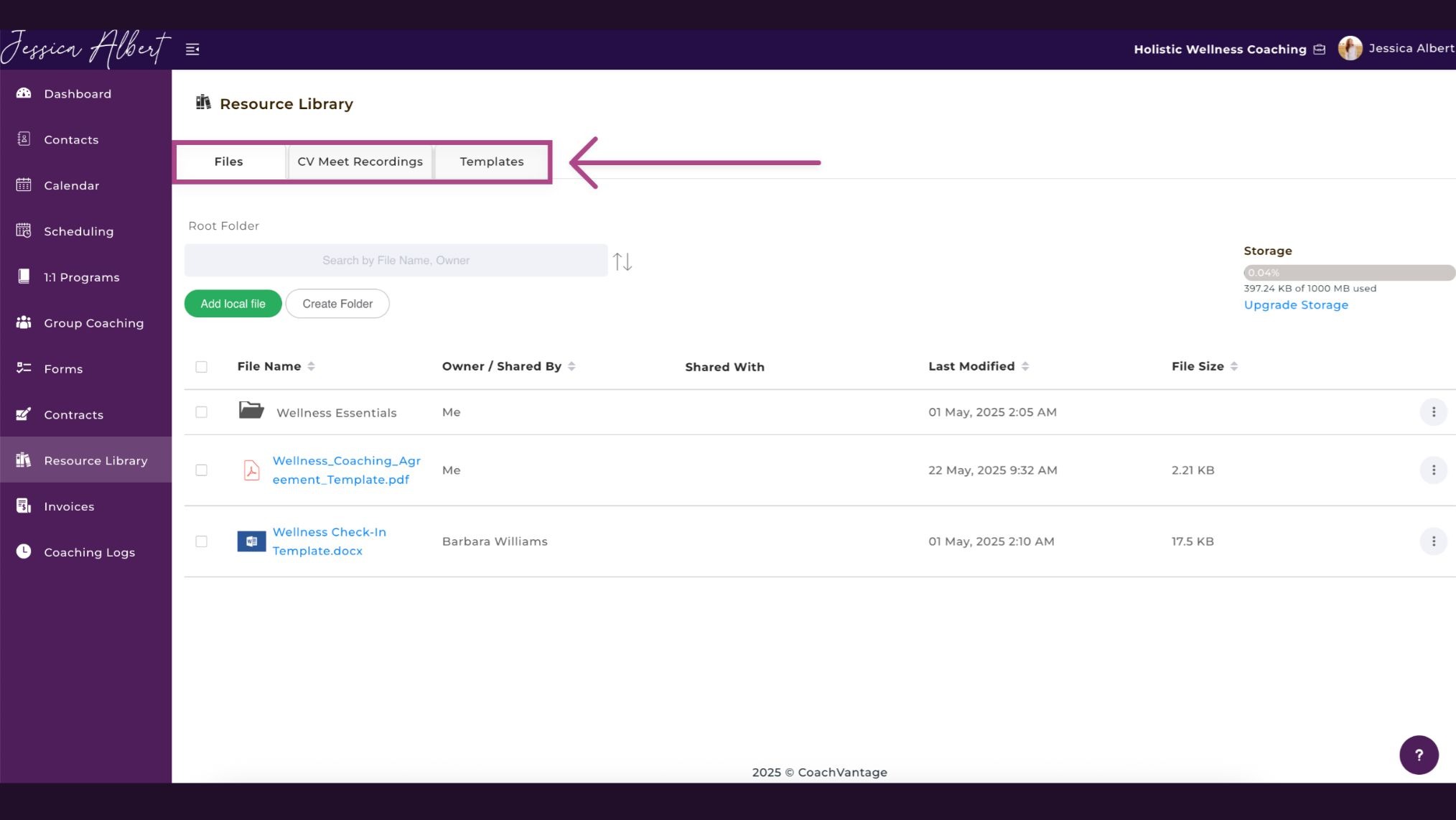
The Resource Library makes it easy to send the client closing materials, whether that's a summary document, a recommended reading list, or a self-coaching framework for ongoing use.
Share these directly from the client's program page, then mark the program as Completed in CoachVantage to close out the record.
What a Coaching Session Looks Like in Practice

A typical coaching session lasts between 45 and 60 minutes, though some coaches work in 90-minute formats. Here's how a well-structured session generally unfolds:
-
Opening: The coach checks in on progress since the last session and asks the client what they want to focus on today.
-
Exploration: Using open-ended questions, the coach helps the client examine their situation from different angles and identify what's really going on beneath the surface.
-
Midpoint shift: The conversation moves toward identifying options, possibilities, and potential actions the client can take.
-
Commitment: The session closes with a clear action commitment: what the client will do, by when, and how they'll hold themselves accountable.
Outcomes of a Well-Structured Coaching Process

When the coaching process is well-designed and consistently followed, the outcomes go beyond whatever the client originally came in with.
Clients develop clearer self-awareness, stronger decision-making skills, and greater confidence in their ability to navigate challenges.
They also tend to carry the habits of reflection and accountability forward into their lives long after the engagement ends.
For coaches, a structured process produces better results, stronger testimonials, higher client retention, and a reputation that generates referrals.
Process isn't the opposite of intuition. It's what gives intuition room to work.
A Strong Coaching Process Changes Everything
A coaching process, when done well, produces clients who experience real, lasting transformation rather than leaving mid-program wondering what they're paying for.
When you show up with clear structure, from the first discovery call through to the closing session, your clients trust you more, stay longer, and get better results.
That's good for them and good for your business. Process is what separates a thriving coaching practice from one that constantly has to start over.
Frequently Asked Questions
What should the coaching process begin with?
The coaching process should begin with an initial assessment and discovery phase. Before any goals are set, the coach needs a clear picture of the client's current situation, challenges, and desired outcomes. A structured intake form and a discovery call are the most effective tools for this.
How many steps are in a typical coaching process?
Most coaching engagements follow between six and ten distinct steps, from initial assessment through to formal closure. The exact number varies depending on the coach's framework and the length of the program, but the key phases of contracting, goal setting, active coaching, review, and closure are present in virtually every effective engagement.
What is the difference between a coaching session and a coaching program?
A coaching session is a single conversation, typically 45 to 60 minutes, focused on a specific topic or goal. A coaching program is the full engagement, usually spanning several weeks or months, made up of multiple sessions along with the contracting, goal setting, mid-program review, and closure stages that give the work its structure and direction.
How do I know when the coaching process is working?
The clearest sign is that your client is taking consistent action between sessions and experiencing tangible shifts in their thinking, behavior, or circumstances. Progress doesn't always look dramatic from week to week, but over the arc of the program, clients should be able to point to clear, meaningful changes from where they started.
Want More Coaching Clients?
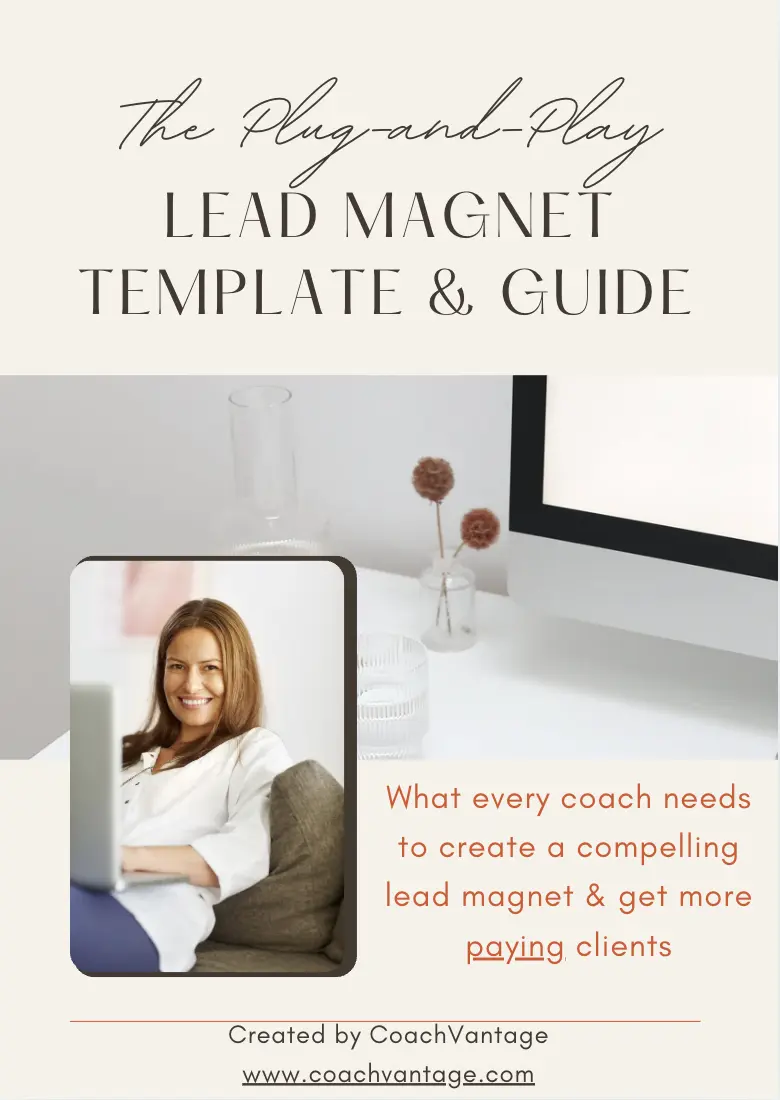
Get Your Free Guide to Create An Irresistible Lead Magnet
And attract clients who want to work with you.
Get Your Free Guide Now
Glen Oliveiro
Founder of CoachVantage
With a pulse on the coaching industry, Glen has personally engaged with hundreds of coaches to develop a platform that addresses their day-to-day challenges. A visionary entrepreneur, Glen is committed to revolutionizing coaching practices through the innovative solutions offered by CoachVantage.





.png)