
August 31, 2026 - Coaching Business
How to Create, Structure & Organize Group Coaching Sessions
How do you run a group coaching program that actually delivers? Learn how to create, structure, and organize group coaching sessions that get results.
.png)
How to Create, Structure & Organize Group Coaching Sessions
Running group coaching isn't about gathering a few clients on a Zoom call and hoping for the best.
Group coaching is one of the most scalable, rewarding delivery formats in a coach's toolkit, and building it on an all-in-one coaching platform from the start makes every part of it cleaner.
Let’s see how you can create, structure, organize, and run group coaching sessions. On top of that, you’ll also learn what belongs in a contract and the mistakes worth avoiding early.
How to Create a Group Coaching Program
Choose Your Niche and Target Audience
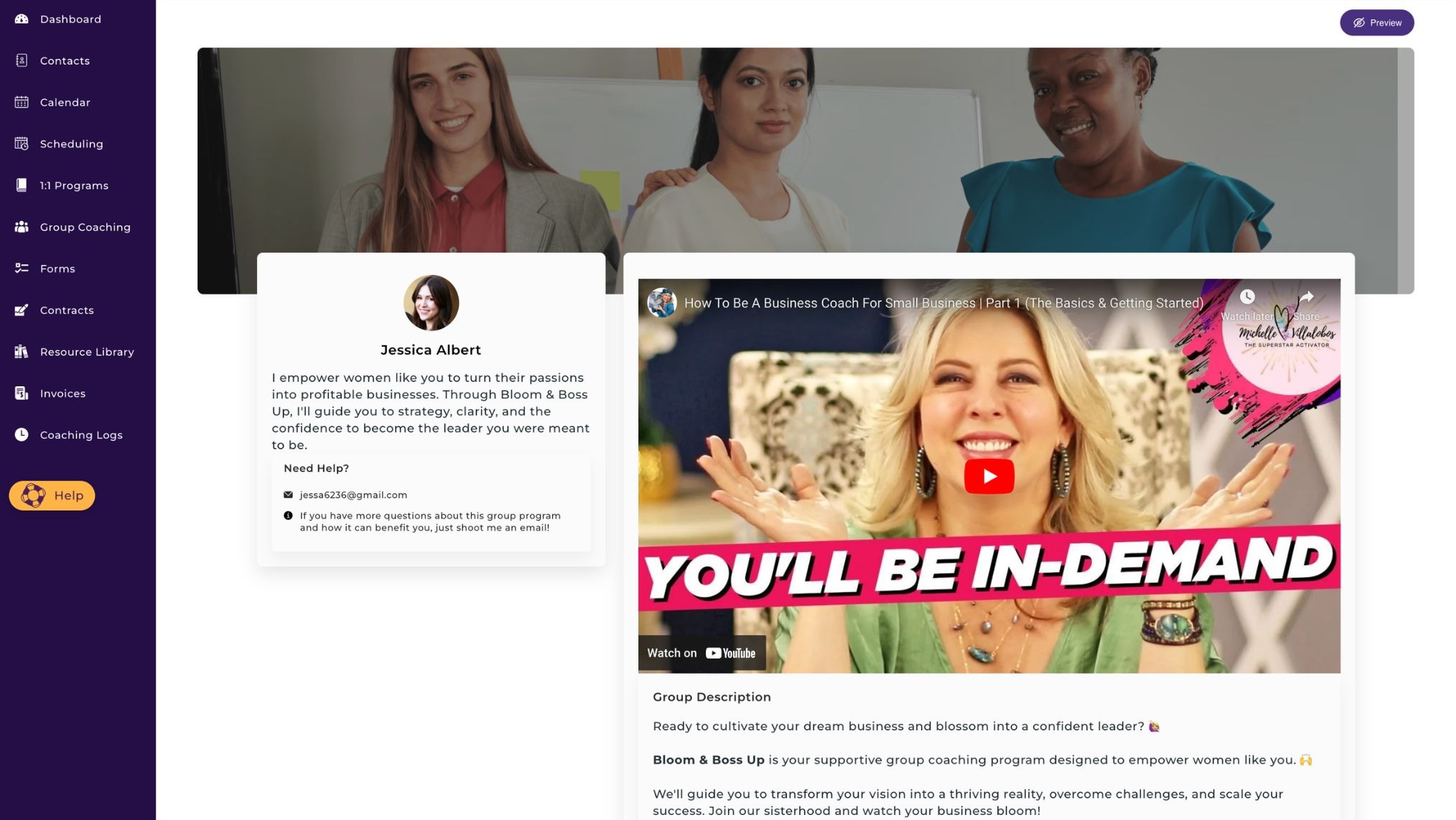
Before anything else, get specific about who you're coaching and why they'd benefit from being in a room together.
A group works when members share a common goal or struggle, think first-time entrepreneurs navigating business launches, or mid-career professionals working on executive presence.
Trying to serve everyone almost always produces a group that serves no one particularly well.
The clearer you are on your audience, the easier everything downstream becomes: messaging, curriculum, and pricing.
Define the Transformation You Are Selling
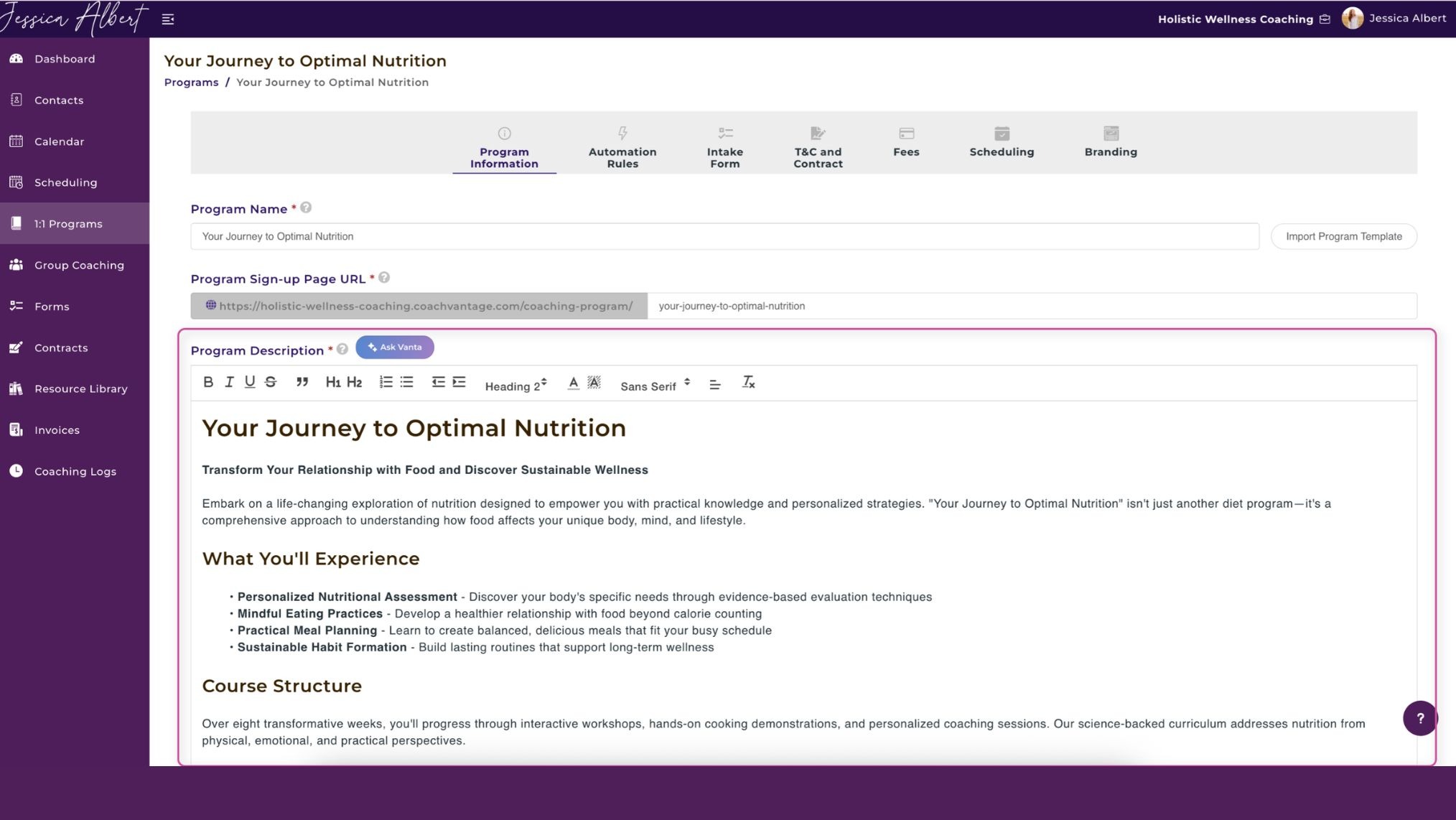
Clients don't buy sessions. They buy an outcome. "Six months to a confident, thriving coaching practice" is compelling; "ten group calls with a coach" is not.
Articulate the specific before-and-after your program delivers, then build everything around that transformation.
This also keeps you honest as you design each module. If a session doesn't contribute to that end result, it probably doesn't belong.
Set the Right Group Size and Session Format
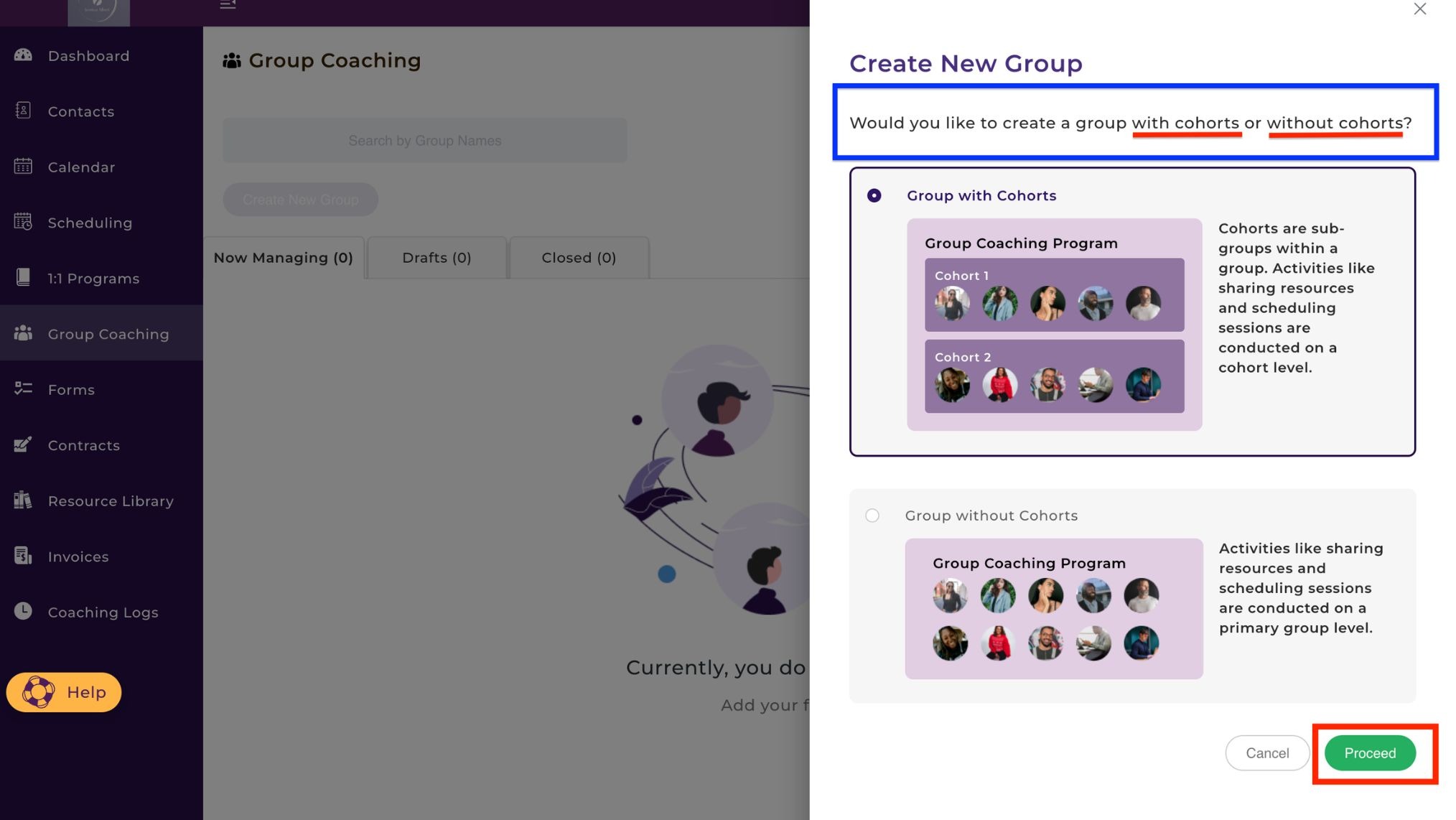
Group size directly affects conversation quality and coaching depth. Small groups of four to six allow for individualized attention.
Medium groups of seven to twelve create enough diversity for rich discussion while still feeling intimate. Beyond twelve, the dynamic shifts toward training, which is a genuinely different service.
For format, online delivery gives you the widest reach. In-person creates deeper connection but limits geography. Hybrid works for groups that value occasional face-to-face interaction alongside virtual flexibility.
Decide on Program Length and Frequency
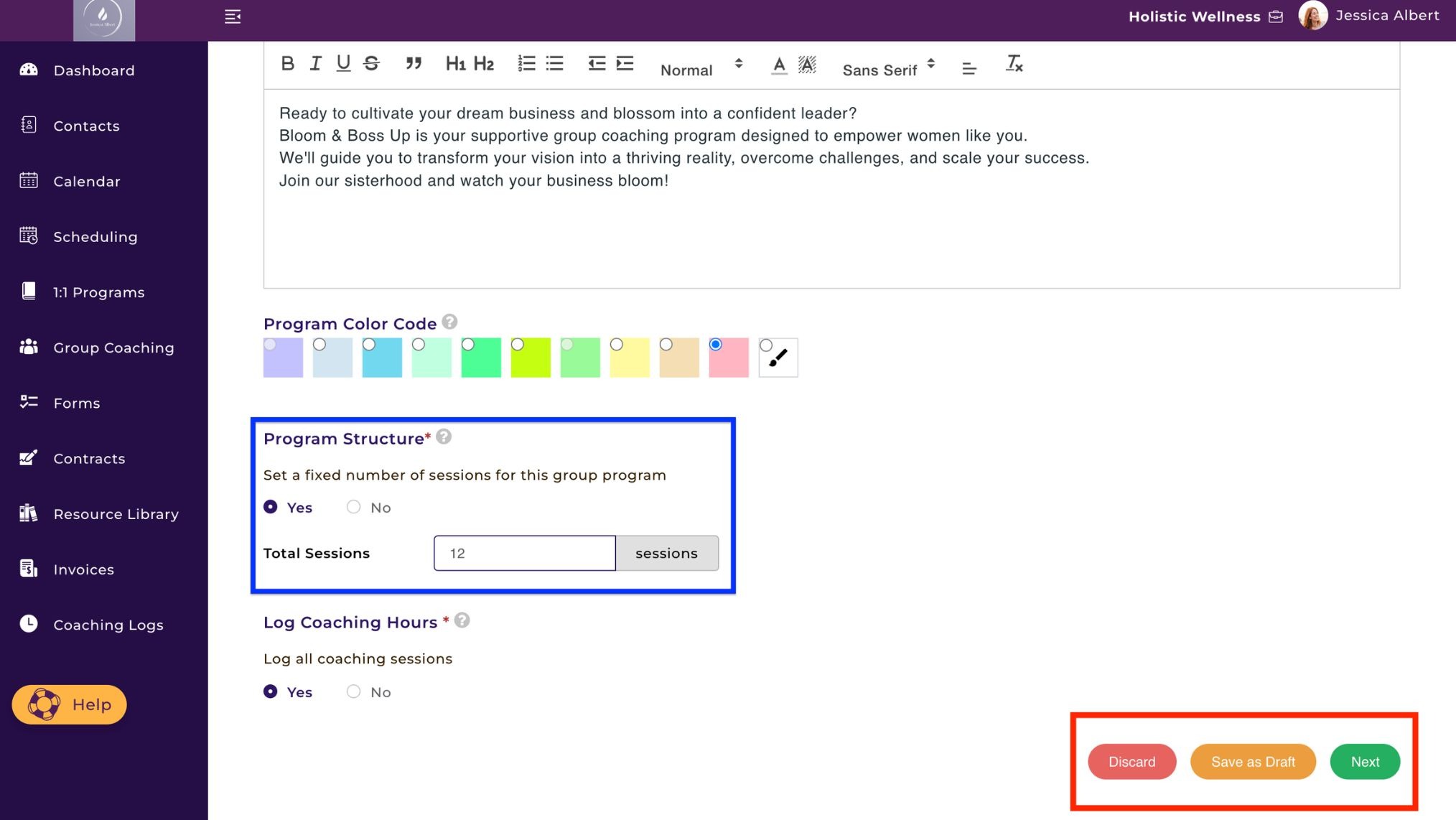
Program length should reflect how long the transformation realistically takes. Goal-specific programs like a 90-day business launch often run eight to twelve weeks.
Longer transformational work, such as leadership development, can stretch six to twelve months.
For frequency, weekly sessions build momentum fast. Biweekly sessions give participants time to implement between calls. Monthly sessions tend to lose momentum unless the group is already well-bonded.
A proven rhythm is to meet weekly for the first two months, then shift to biweekly for the remainder.
Build Your Curriculum
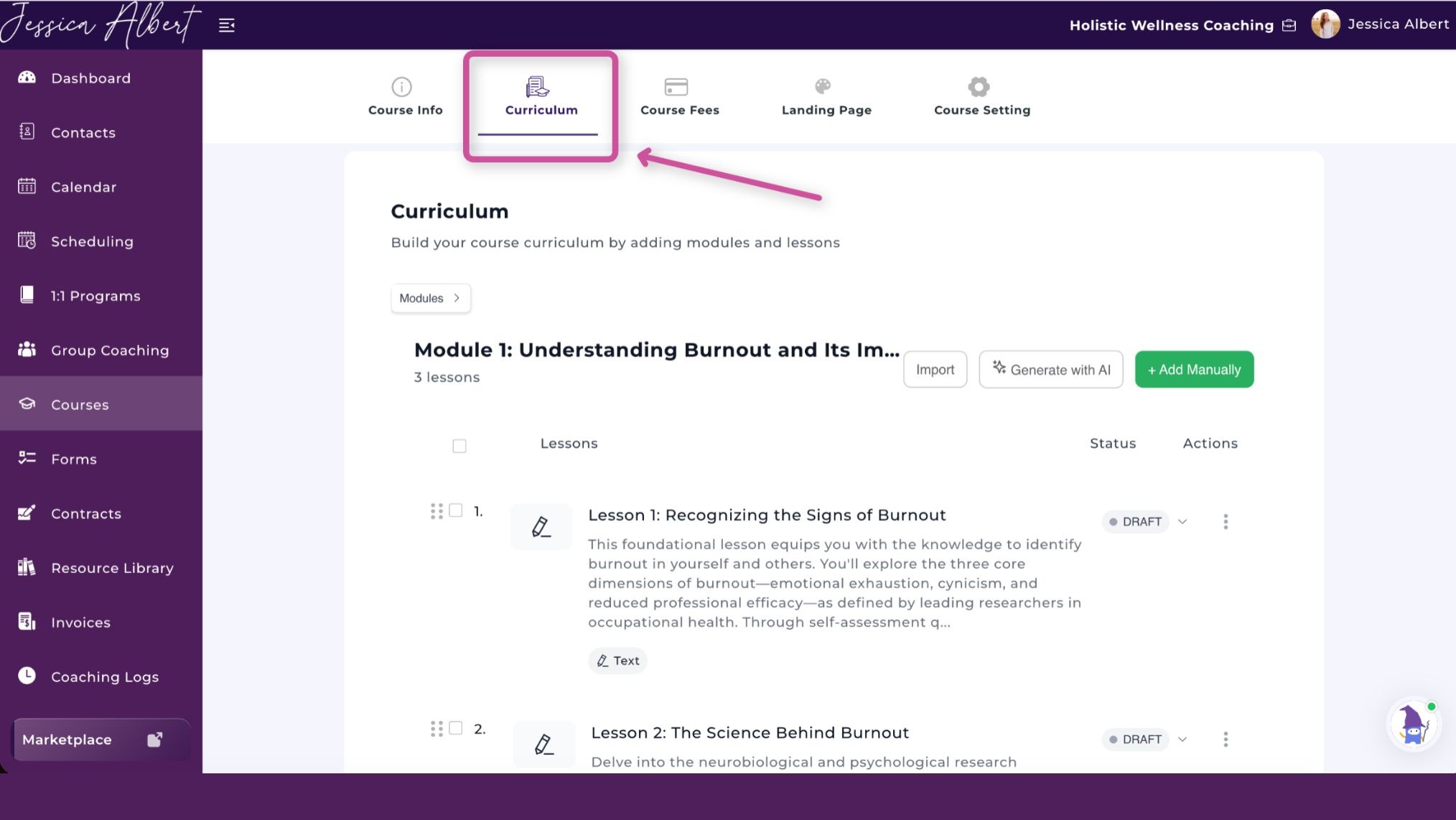
Consider how each group session fits into the client’s broader transformation, so that every conversation builds on what came before.
Session one isn't just an intro. It's the moment that establishes group trust and sets the tone for everything that follows.
Good curricula mix content delivery with participant reflection, peer input, and accountability check-ins.
Leave room for what the group itself brings because the best coaching moments are often unplanned.
Price Your Program
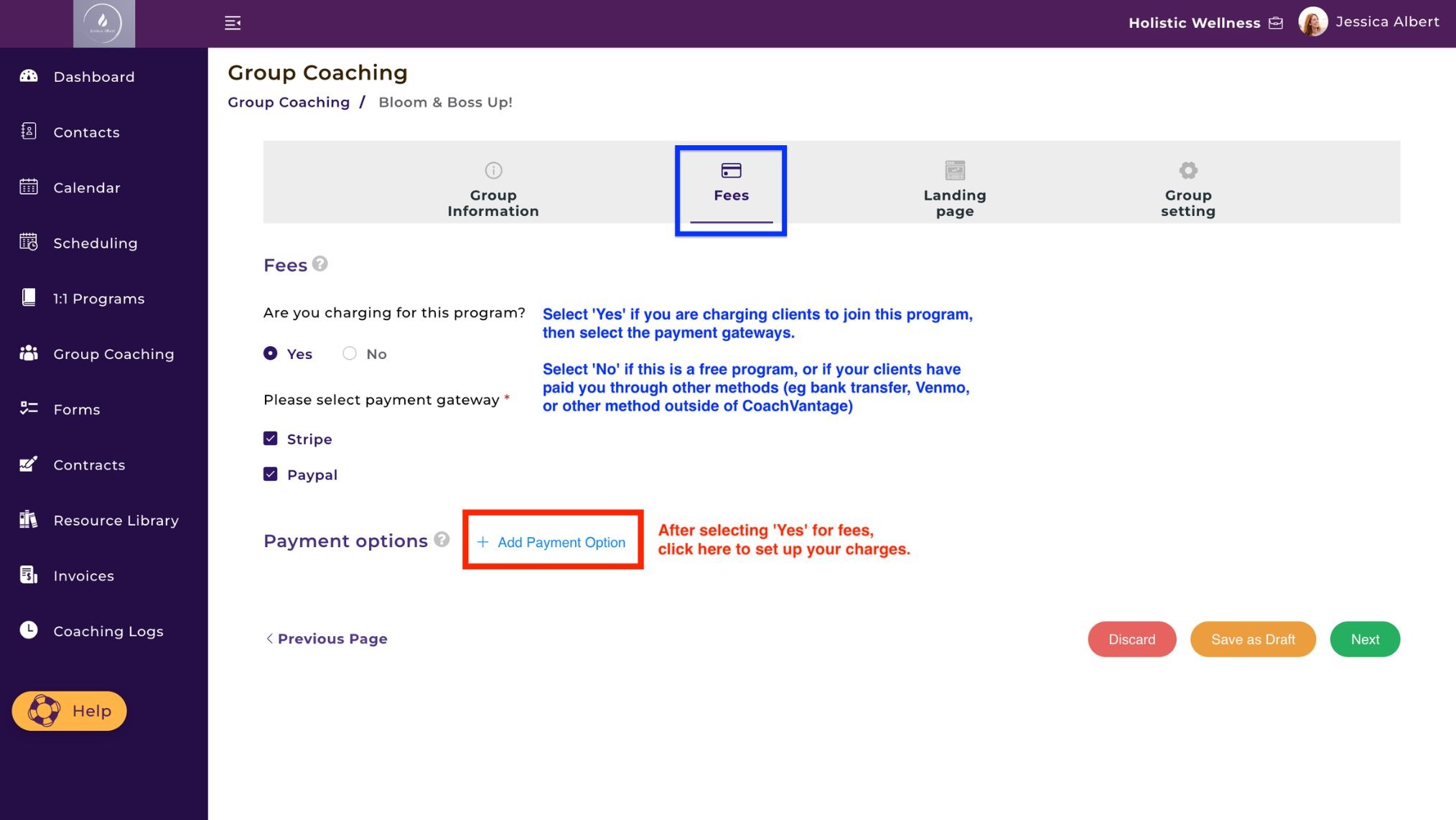
If your individual rate is $300 per hour and your group session runs 90 minutes, you're investing 1.5 hours of delivery time regardless of how many people attend.
Four clients at $150 each yields $600 for that session, double your typical 1:1 rate.
Price your group coaching program based on the value of the transformation, your audience's ability to pay, and what's included beyond live sessions.
If affordability is a concern, offer a single scholarship spot rather than discounting the entire program.
How to Structure a Group Coaching Program

The Opening Session
The first session establishes whether participants feel safe enough to be honest in all the sessions that follow.
Rushing through it to get to the content is a common mistake. Plan for introductions, a clear walkthrough of the program journey, and a group discussion around confidentiality and norms.
Setting expectations explicitly here prevents friction later, and it gives participants a sense of what they're actually building together.
Mid-Program Sessions
Mid-program is where the real coaching work happens, and where sessions can feel repetitive without deliberate variation.
Some sessions may center on a theme with brief content framing followed by group discussion. Others might involve a participant presenting a real challenge for the group to work through collectively.
Pairing participants as accountability partners between sessions is a simple practice that noticeably increases engagement and follow-through.
The Closing Session
The final session is about consolidation and forward momentum, not recap.
Help participants name what has changed, what they're committing to next, and how they'll sustain progress without the group structure holding them up.
A simple exercise that consistently works: each participant shares one insight, one shift, and one next action. It's one of the most powerful moments in the entire program.
How to Organize Group Coaching Sessions
Scheduling and Logistics
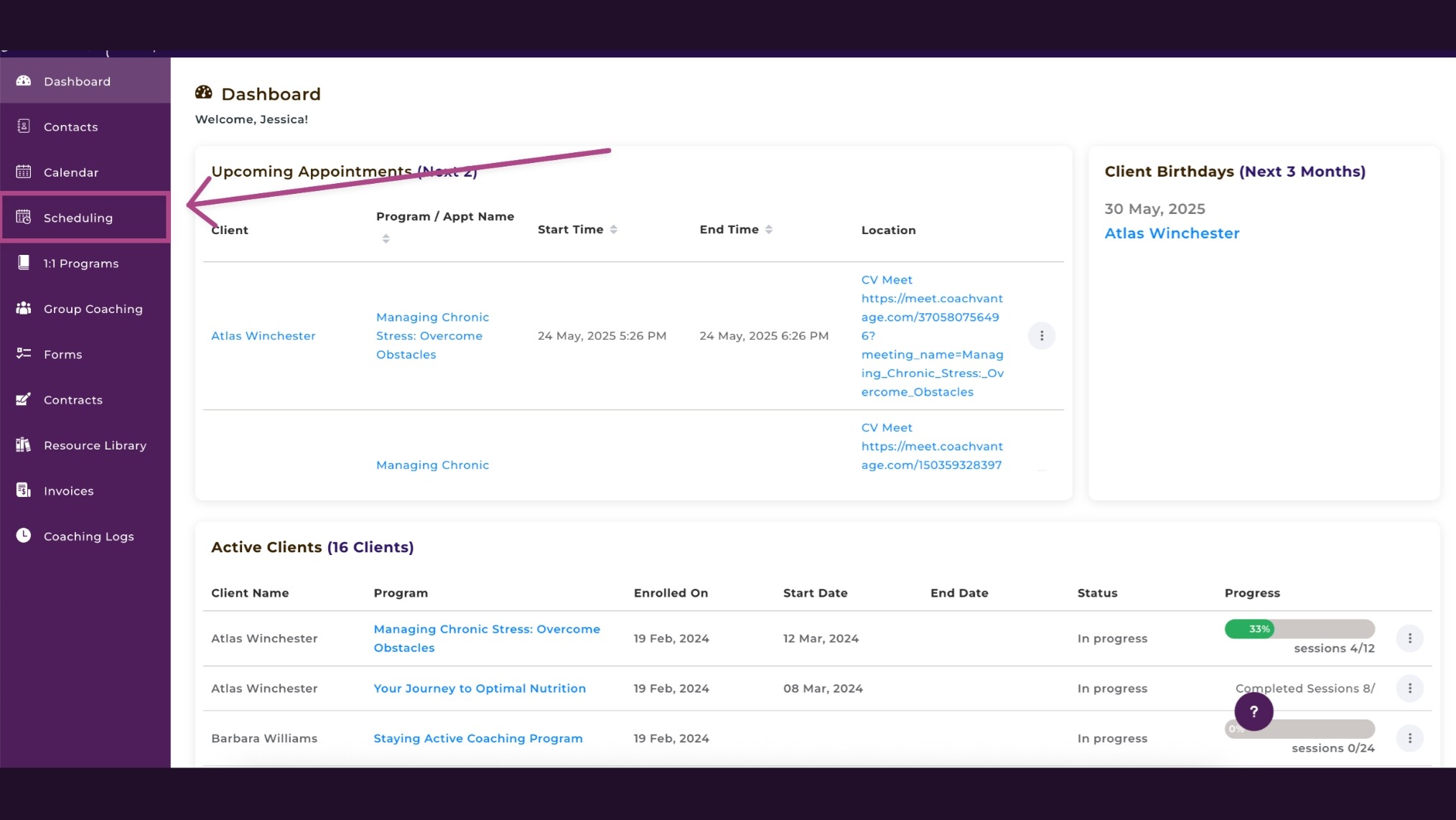
Settle on session times before enrollment opens and communicate clearly that those times are fixed. Trying to accommodate every member's schedule after the fact is a fast track to chaos.
Send calendar invites immediately on enrollment, with automated reminders 24 hours before each session. Consistency in logistics signals professionalism and reduces no-shows significantly.
In the CoachVantage group management dashboard, you’ll be able to easily see and mark each team member's attendance status.
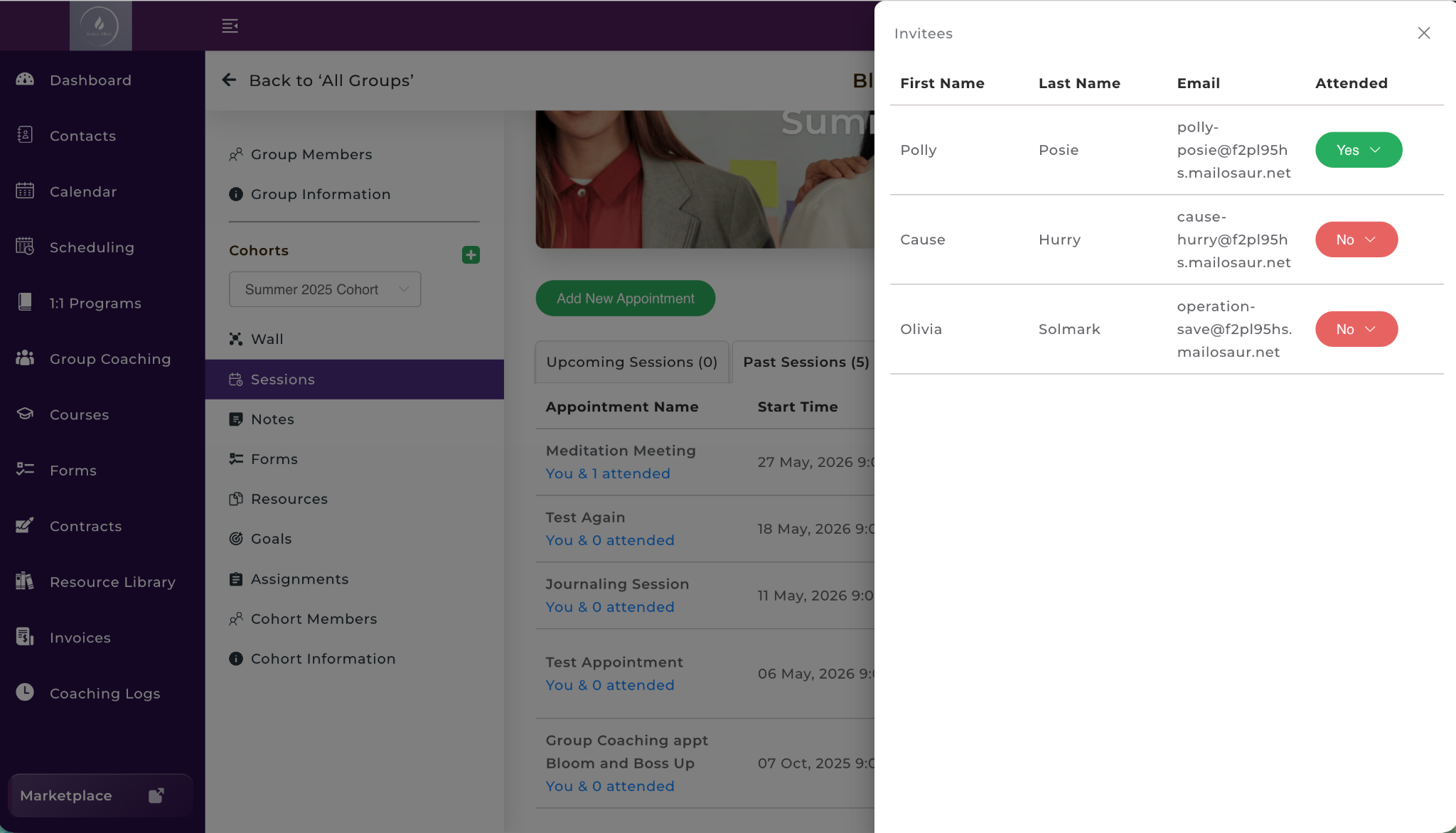
It gives you a one-glance look to see who has RSVP’d to the meeting invite. Furthermore, if a member RSVP’d as ‘attending’ but doesn’t actually turn up for the session, you can edit the attendance status so you have an accurate attendance record.
Tools and Platforms
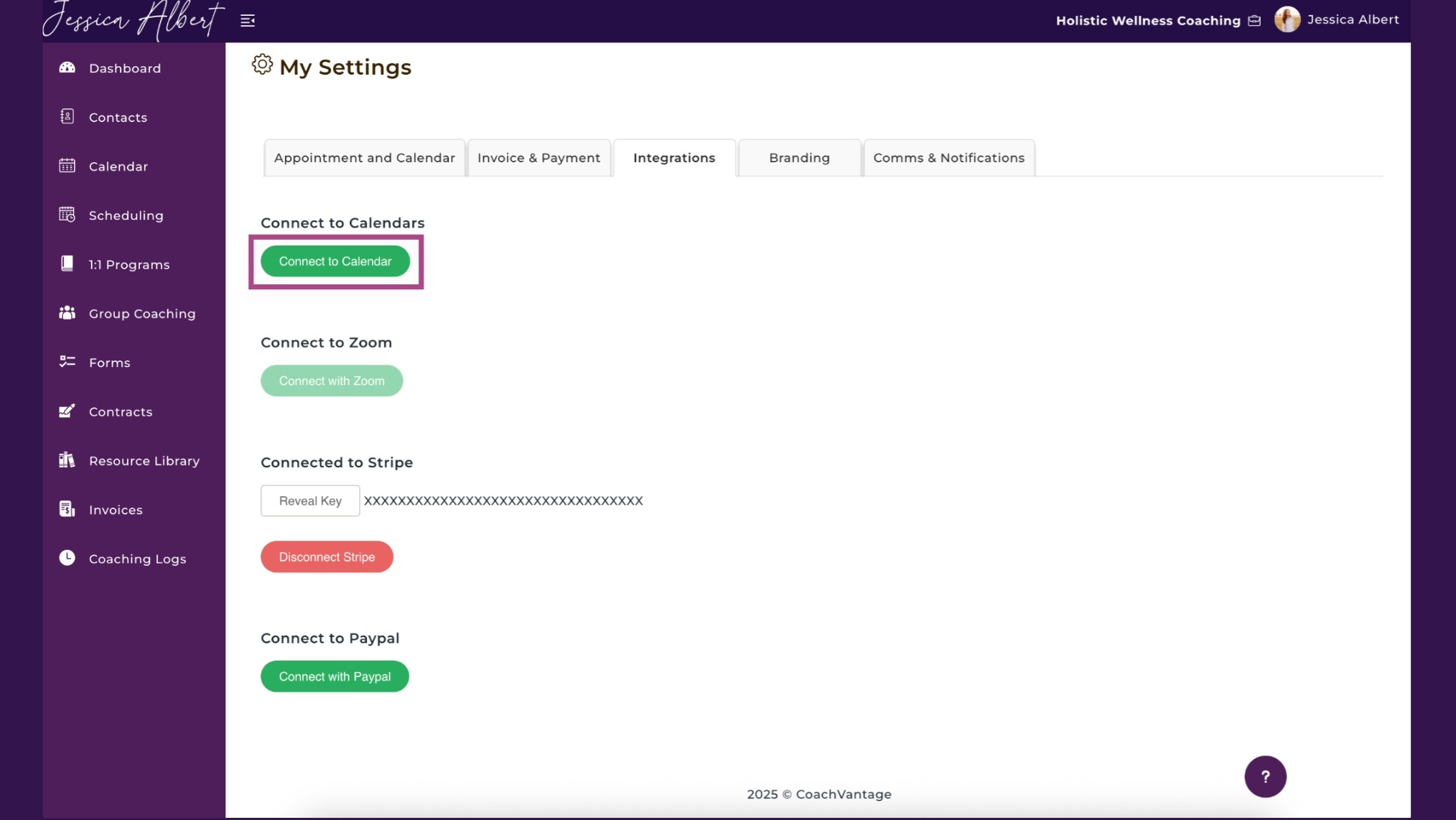
For delivery, Zoom is one of the most widely used platforms for online group coaching.
Manage Your Coaching Practice in One Place
CoachVantage automates your business workflows so you can focus on impactful coaching results.
For between-session engagement, a Slack workspace or private Facebook group can work depending on your audience. The fewer platforms participants need to manage, the better.
CoachVantage consolidates all these in one place. You get access to essentials like program creation, enrollment, payment collection, group assignments, forms, and progress tracking, all without bouncing between multiple tools.
CoachVantage also has a ‘community wall’ feature where group members can collaborate, share success stories, celebrate wins together, and motivate each other through common challenges. It’s a feature that coaches find extremely useful to manage everything about their group in one place, without resorting to other tools like Facebook or HighLevel.
Onboarding Participants
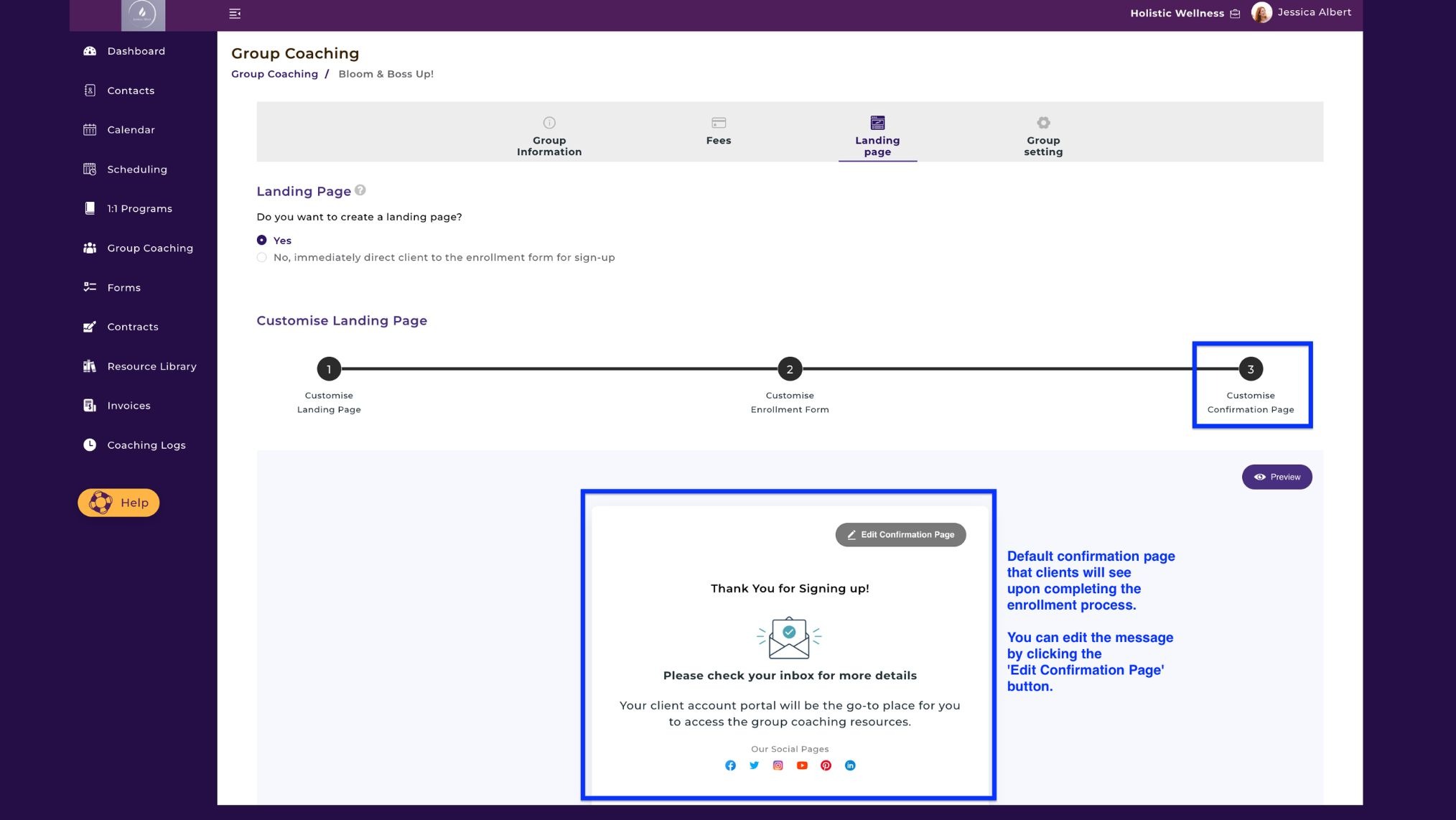
Good onboarding reduces premature member drop-offs and sets the tone for the whole program. Before session one, participants should have a welcome email, client portal access, a completed intake form, and a signed contract.
CoachVantage automates this entire flow. Clients sign up, pay via Stripe or PayPal, e-sign their contract, and complete an intake form in one seamless sequence.
Once enrolled, they're automatically added to the group and receive all shared resources instantly.
How to Run a Group Coaching Session
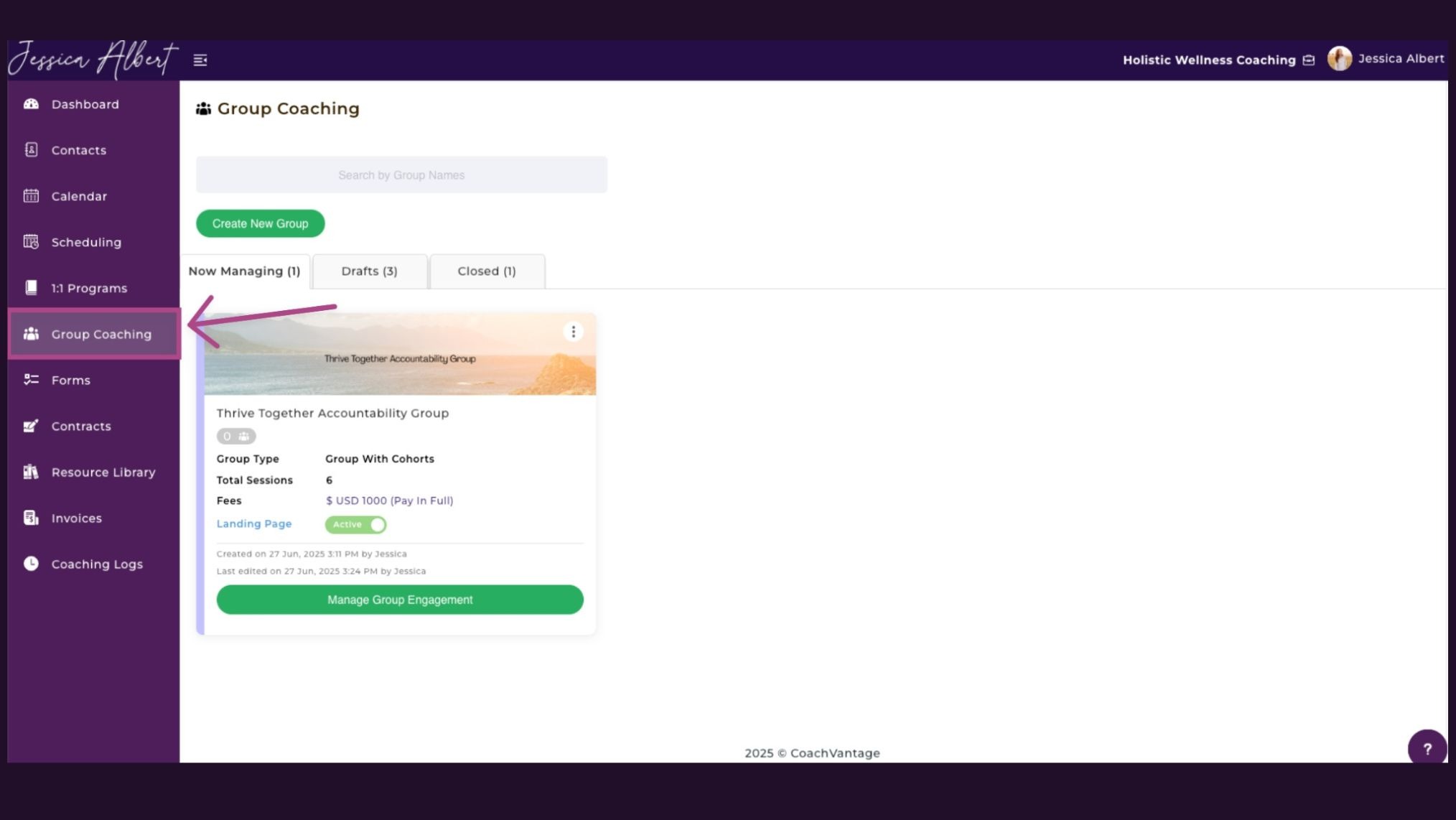
Setting the Session Agenda
A strong agenda has a clear opening, a core focus, and a defined close. Share it with participants ahead of time. Keep it lean; an agenda with seven items for a 90-minute call sets up a rushed, unsatisfying session.
Reserve the last ten minutes for reflection and identify next steps. These closing minutes are where accountability actually gets built, session by session.
Managing Group Dynamics
Every group eventually surfaces the same patterns: someone who dominates, someone who goes quiet, two members who keep circling the same conflict.
Anticipating these patterns is what separates confident facilitation from reactive facilitation.
Establish group norms in session one and refer back to them when dynamics get difficult. Redirecting gently and directly, "Let's hear from someone who hasn't shared yet," is a complete and effective sentence.
Keeping Participants Engaged and Accountable
Engagement drops when participants feel like spectators. Build in regular moments where everyone contributes, shares a reflection, or names a next step.
A simple opening check-in, one word that describes where someone is today, creates presence and continuity.
CoachVantage lets you assign goals and tasks to the entire group simultaneously, and you can see each member's completion status at a glance from the group management page.
Handling Difficult Participants
A participant who regularly derails sessions or undermines group trust needs a direct private conversation, not a public correction.
Address it between sessions, be clear about what needs to change, and name the consequence if it doesn't.
CoachVantage gives you the option to suspend or remove a member when necessary. Suspension is temporary and reversible; removal is permanent. Both are accessible from the group member management page.
What to Include in a Group Coaching Contract
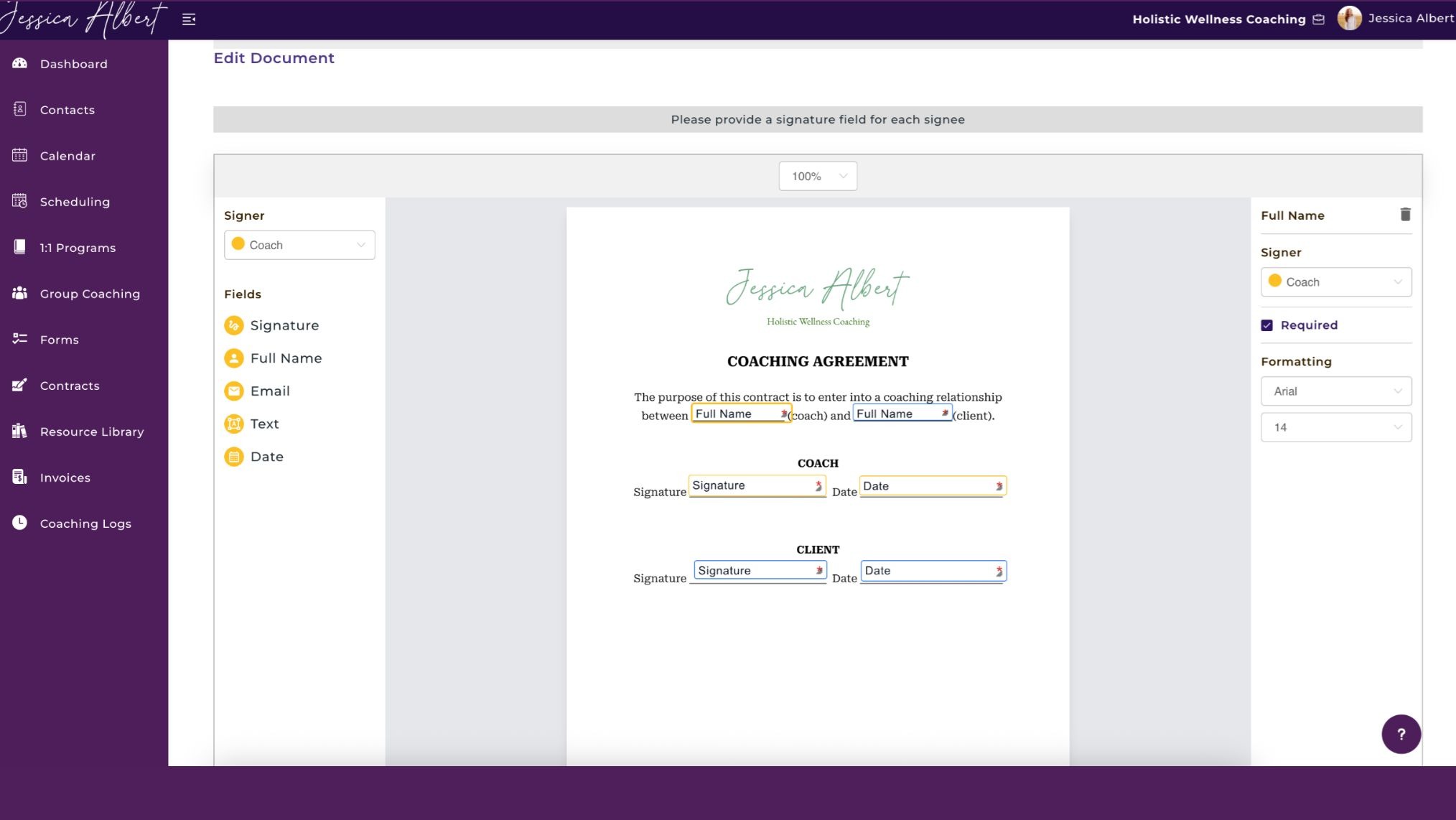
Length of the Contract
The contract should cover the full duration of the program. For evergreen groups, specify the initial commitment period, typically three months, with clear terms for continuation.
Keep language plain; clients who don't understand their contract are more likely to dispute it.
Clauses
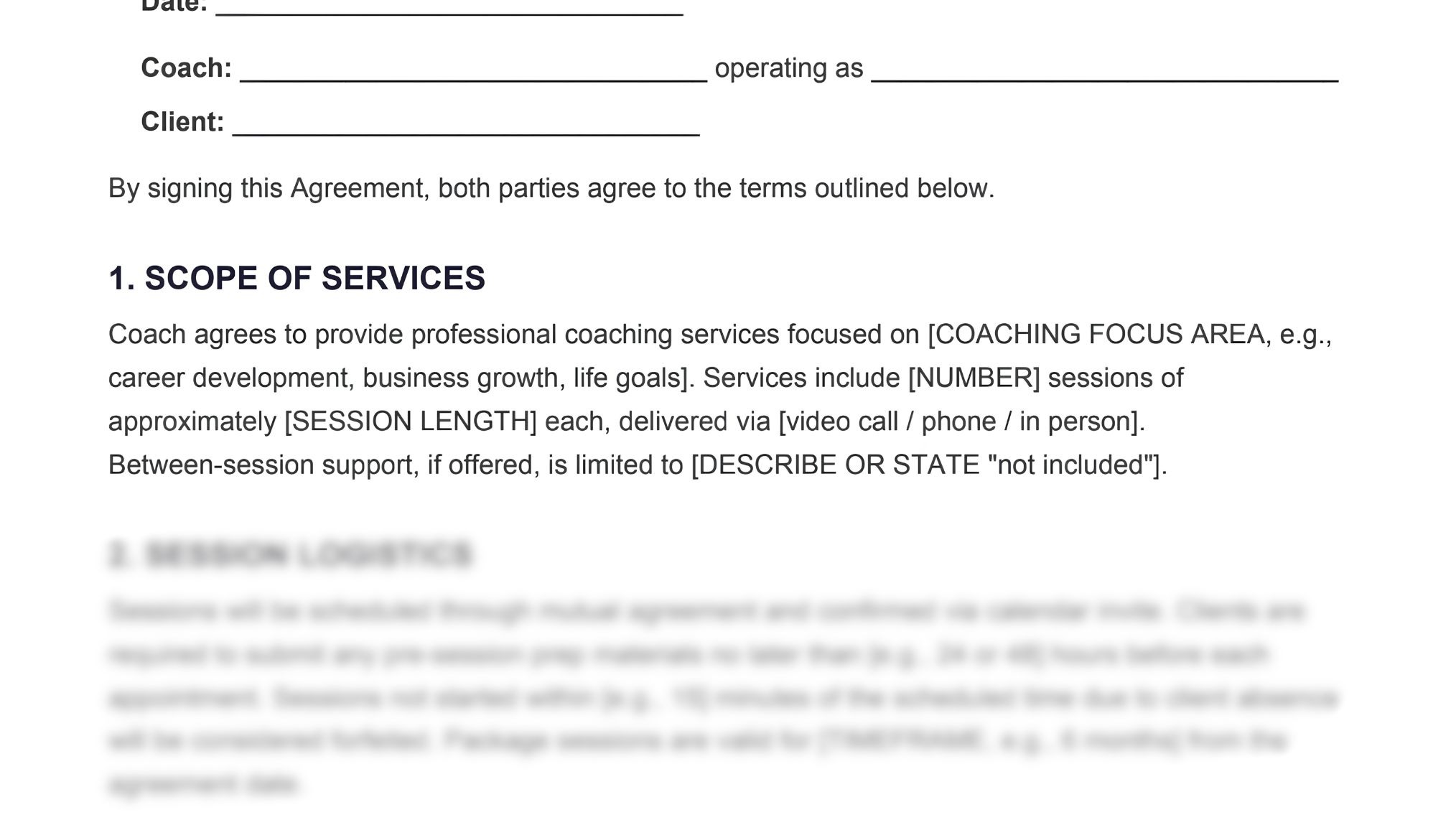
Core clauses to include: program scope and deliverables, session schedule, communication expectations, confidentiality obligations for all parties, and acceptable use of shared materials.
A confidentiality clause matters more in group settings because participants share with peers, not just with you.
Guaranteed Compensation
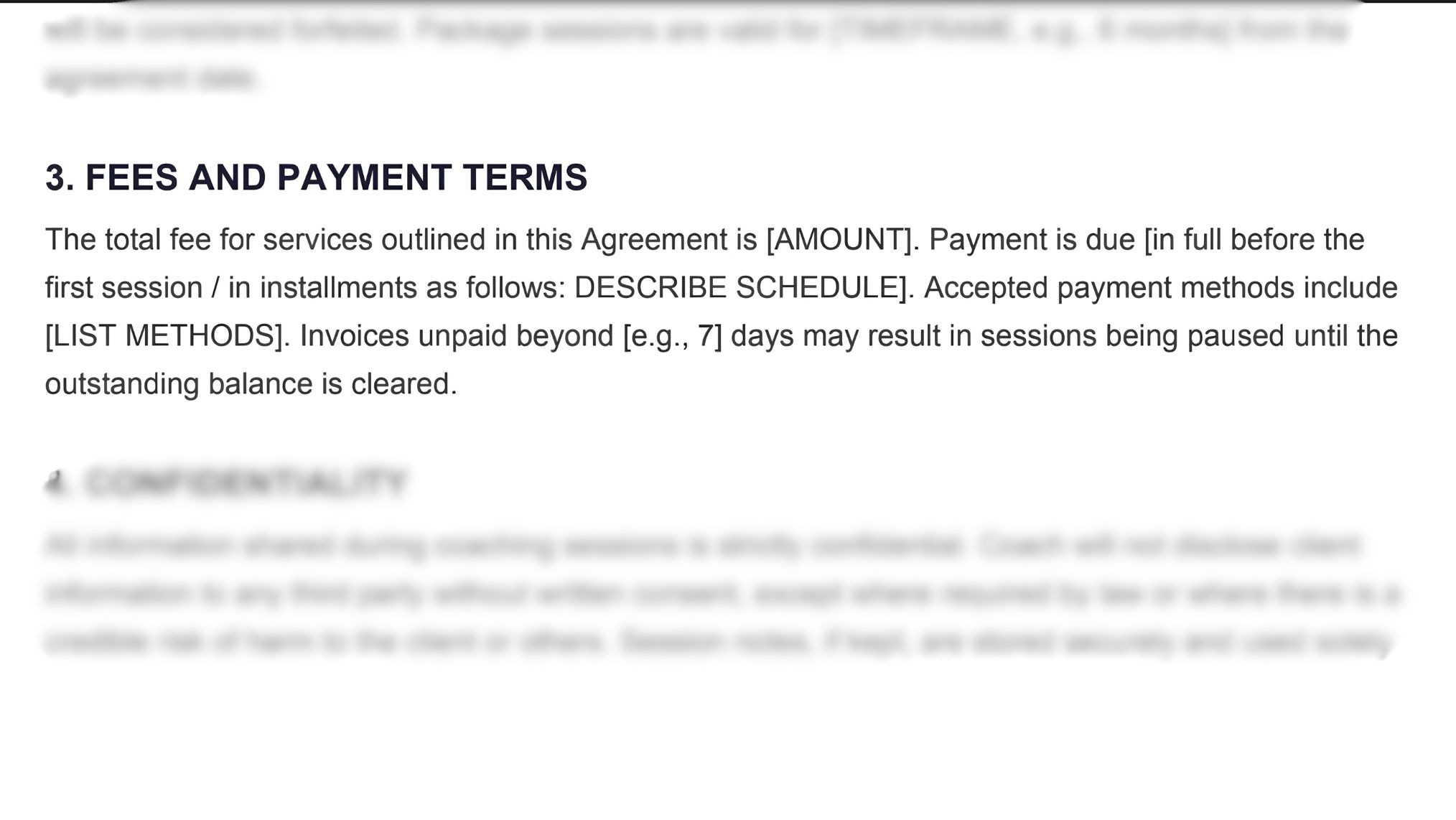
Specify the total program fee and clarify that payment is due regardless of attendance.
Clients who miss sessions shouldn't expect refunds; they signed up for access to the program, not just the sessions they attended. If offering installments, outline the full payment schedule explicitly.
Supplemental Compensation
If the program includes optional add-ons such as a 1:1 call or extended resource access, list these separately with their associated costs.
Don't bundle them into the base fee without disclosing them clearly. This protects you from disputes and helps clients understand exactly what they're getting.
Termination and Performance
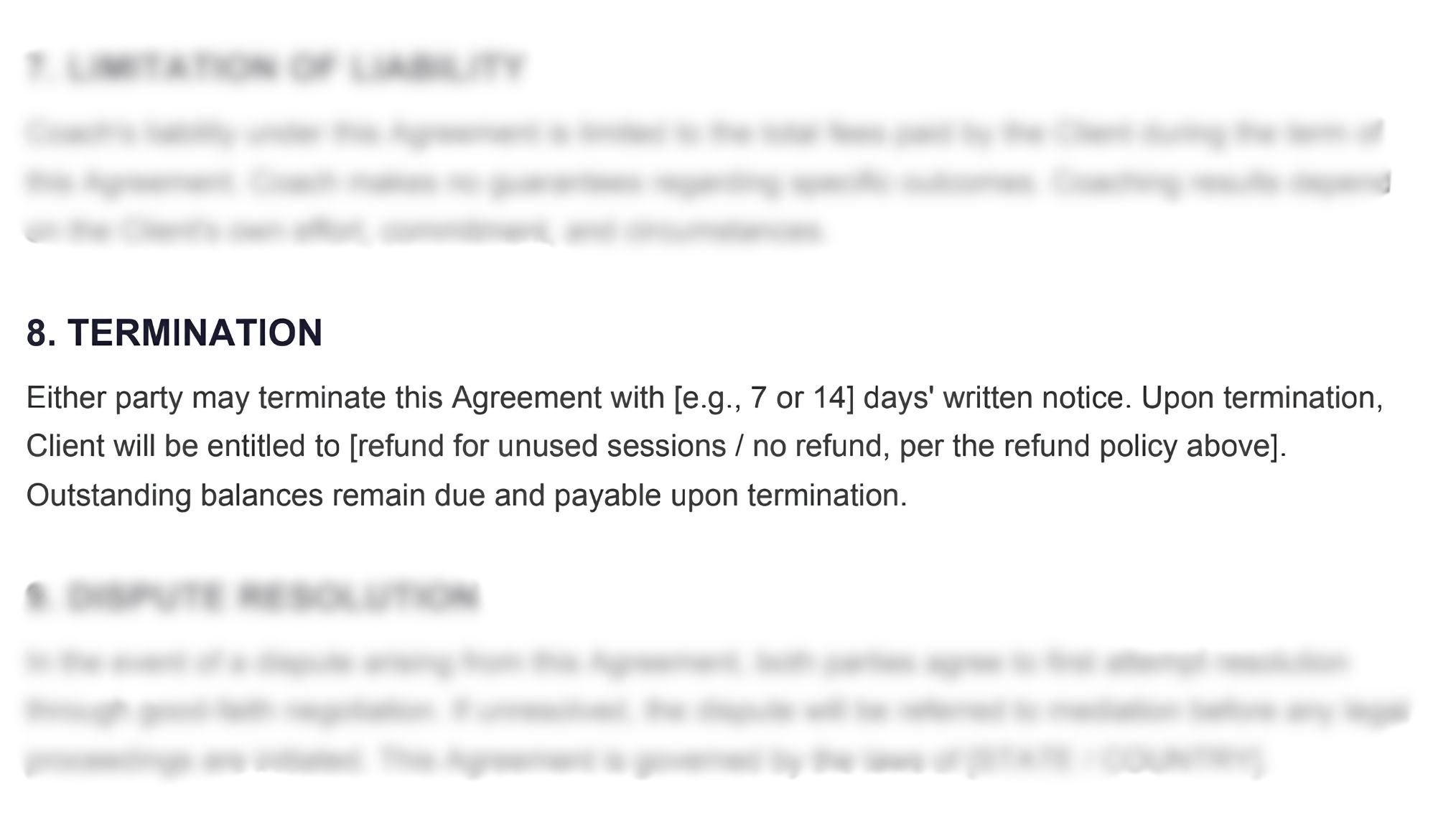
Define the conditions under which either party can exit early. For the client, early termination typically means forfeiting fees paid.
For you, specify circumstances that would warrant ending the engagement, such as repeated norm violations or non-payment. Vague language here creates room for disputes.
Buy-Out Provisions
A buy-out clause outlines what a client owes for leaving before the program ends. Requiring payment of the remaining balance in full upon early exit is a common approach.
For monthly subscription models, specify the required cancellation notice period before the next charge.
For evergreen groups, most coaches set an initial commitment period of around three months before any exit terms apply.
Common Mistakes Coaches Make with Group Coaching
Underpricing the program
Coaches new to group formats often charge what feels "fair for a group" rather than what reflects the transformation delivered. The result is a resentful coach and an undervalued experience.
Over-delivering in sessions
Cramming too much into each call leads to shallow coverage of everything. Depth beats breadth every time. Cover fewer things well and give the group room to actually process what they're learning.
Skipping proper onboarding
When participants arrive at session one confused, unprepared, or not yet fully committed, it affects the whole group dynamic from the start. Onboarding isn't admin; it's the first coaching touchpoint.
Running without a contract
Disputes over payment, attendance, and early exits are far more common in group settings than coaches expect. A clear contract doesn't signal distrust; it signals professionalism.
Ignoring group dynamics until they become problems
Difficult participants, quiet members, and emerging cliques don't disappear on their own. Addressing them early, with directness and care, keeps the group experience intact for everyone.
Your Group Coaching Deserves a Stronger Foundation
Getting group coaching right means aligning design, structure, facilitation, contracts, and operations from the beginning.
CoachVantage handles the backend so you can focus on the coaching: create and publish your program, automate enrollment and onboarding, manage cohorts, track member progress, handle payments, and communicate with the whole group from one platform.
Start your FREE trial today and see how much cleaner running a group program can be.
Frequently Asked Questions
How many people should be in a group coaching session?
Most effective group programs have between four and twelve participants. Fewer than four limits the diversity of perspectives; more than twelve makes individual attention difficult and pushes the dynamic toward training.
How long should a group coaching program run?
Short-term, goal-specific programs typically run eight to twelve weeks. Longer transformational programs can run six to twelve months. The right length depends on how much time the intended outcome realistically requires.
What is the difference between group coaching and a mastermind?
Group coaching is coach-facilitated, with a coach guiding members toward individual goals within a shared program. A mastermind is more peer-driven, with members advising each other and the facilitator playing a lighter role.
How do I keep group coaching participants accountable?
Build accountability into the program structure rather than relying on self-motivation. Accountability partners, between-session assignments, and visible progress tracking all help.
Want More Coaching Clients?
Get Your Free Guide to Create An Irresistible Lead Magnet
And attract clients who want to work with you.
Get Your Free Guide Now
Glen Oliveiro
Founder of CoachVantage
With a pulse on the coaching industry, Glen personally engaged with hundreds of coaches to develop a platform that addresses their day-to-day challenges. A visionary entrepreneur, Glen is committed to revolutionizing coaching practices through the innovative solutions offered by CoachVantage.
https://www.coachvantage.com