
August 31, 2026 - Coaching Business
How to Start & Build an Online Coaching Business from Scratch
Want to start an online coaching business? This guide covers everything from choosing a niche and getting certified to landing your first clients.

How to Start & Build an Online Coaching Business from Scratch
Starting a coaching business sounds exciting until you realize how much goes on behind the scenes.
I've spoken to hundreds of coaches across niches and countries, and the story is almost always the same: the coaching part is easy, but running the business is where things get messy and complicated.
This article walks you through every step, from picking a niche and creating your first offer to systemizing your coaching business and implementing a CRM that keeps clients, sessions, and payments organized in one place.
Why Online Coaching Is a Viable Business Model

According to the ICF's 2025 Global Coaching Study, coaching is now a $5.34 billion global industry, a 17% increase from 2022. In the US specifically, coaches earn an average of $71,719 annually, well above the global average of $49,283.
Hourly rates average $234 per session globally, rising to $297 for North American coaches, and executive coaches working with C-suite clients routinely charge $500 or more.
The online format is also what makes the business economics work. More than half of coaching revenue in the US now comes from virtual sessions, and online delivery opens up revenue streams that hourly, in-person work simply can't.
A single coach can run group programs, sell recorded courses, or take on clients across time zones without adding overhead. You don't need office space, a large team, or significant startup capital.
A reliable internet connection, a solid methodology, and the right platform can get you up and running within weeks.
How to Start an Online Coaching Business
Step 1: Choose Your Coaching Niche
The ICF's 2025 Global Coaching Study found that sales coaching is the highest-earning niche globally, averaging $80,390 annually. That’s nearly double the overall average. Specialization pays.
Think about where your experience and genuine interest overlap. A former corporate HR professional has a natural home in career coaching. Someone who has personally navigated burnout brings genuine credibility to wellness coaching.
Your niche doesn't have to be narrow forever, but starting focused gives you a clear message, a specific audience, and a faster path to credibility.
Step 2: Get Certified
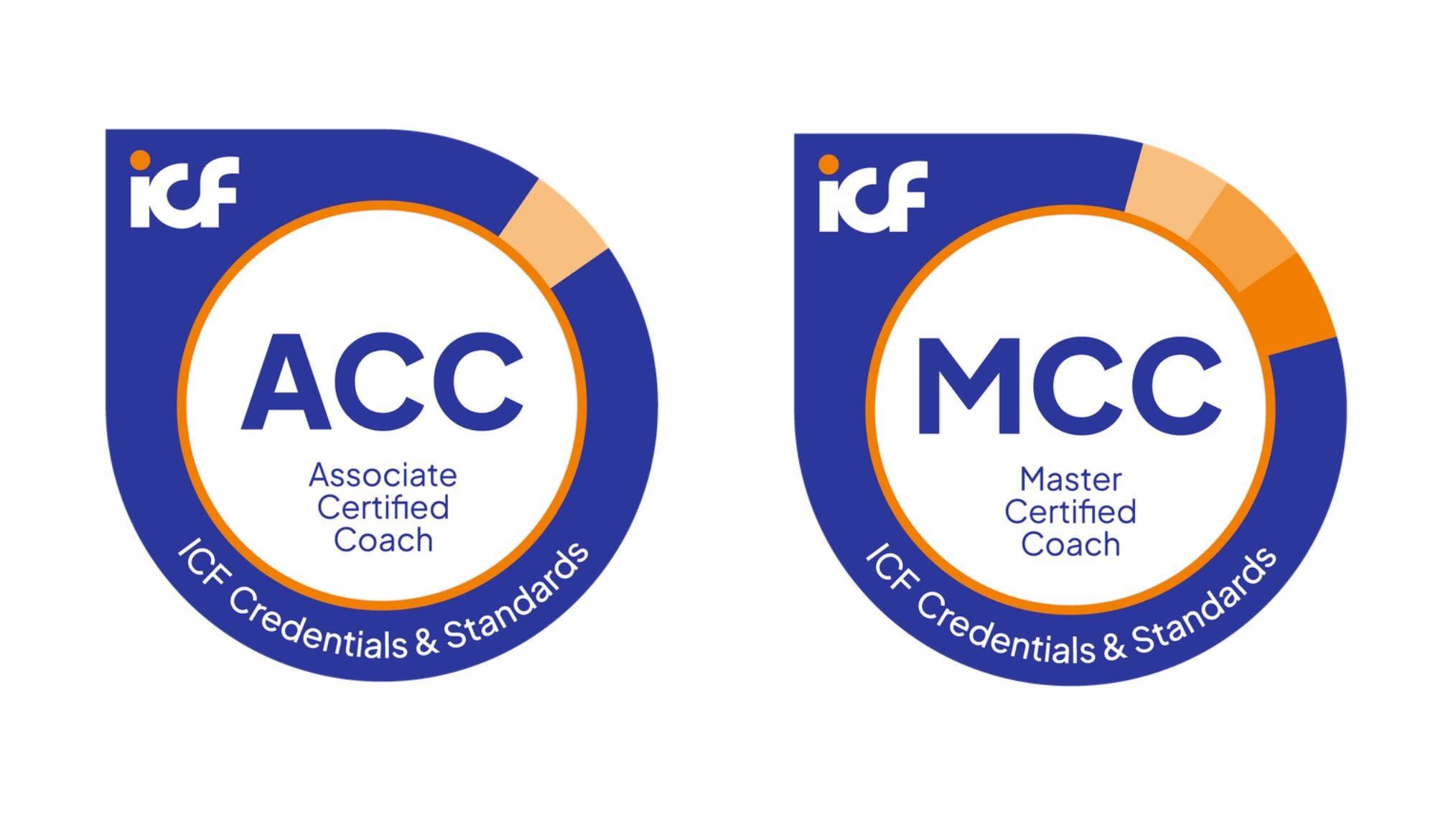
Certification isn't legally mandatory in most countries, but it matters enormously to clients. The International Coaching Federation (ICF) is the most recognized credentialing body globally.
Their entry-level Associate Certified Coach (ACC) credential requires at least 60 hours of coach-specific training and 100 hours of coaching experience.
Certification also makes the business side easier.
Platforms like CoachVantage automatically log your coaching hours for each client engagement, so when it's time to submit for your ICF credential, your records are already organized and export-ready.
Step 3: Define Your Ideal Client
Before you write a single word of copy or create a package, get specific about who you're coaching. Not just "women in their 30s" but what they struggle with, what they've already tried, and what success looks like to them. This shapes everything from your messaging to your pricing.
Talk to at least five potential clients before you launch. Their exact words will do more for your marketing than any copywriting formula. If someone says "I feel stuck, but I don't even know where to start," that phrase belongs in your copy, not a sanitized version of it.
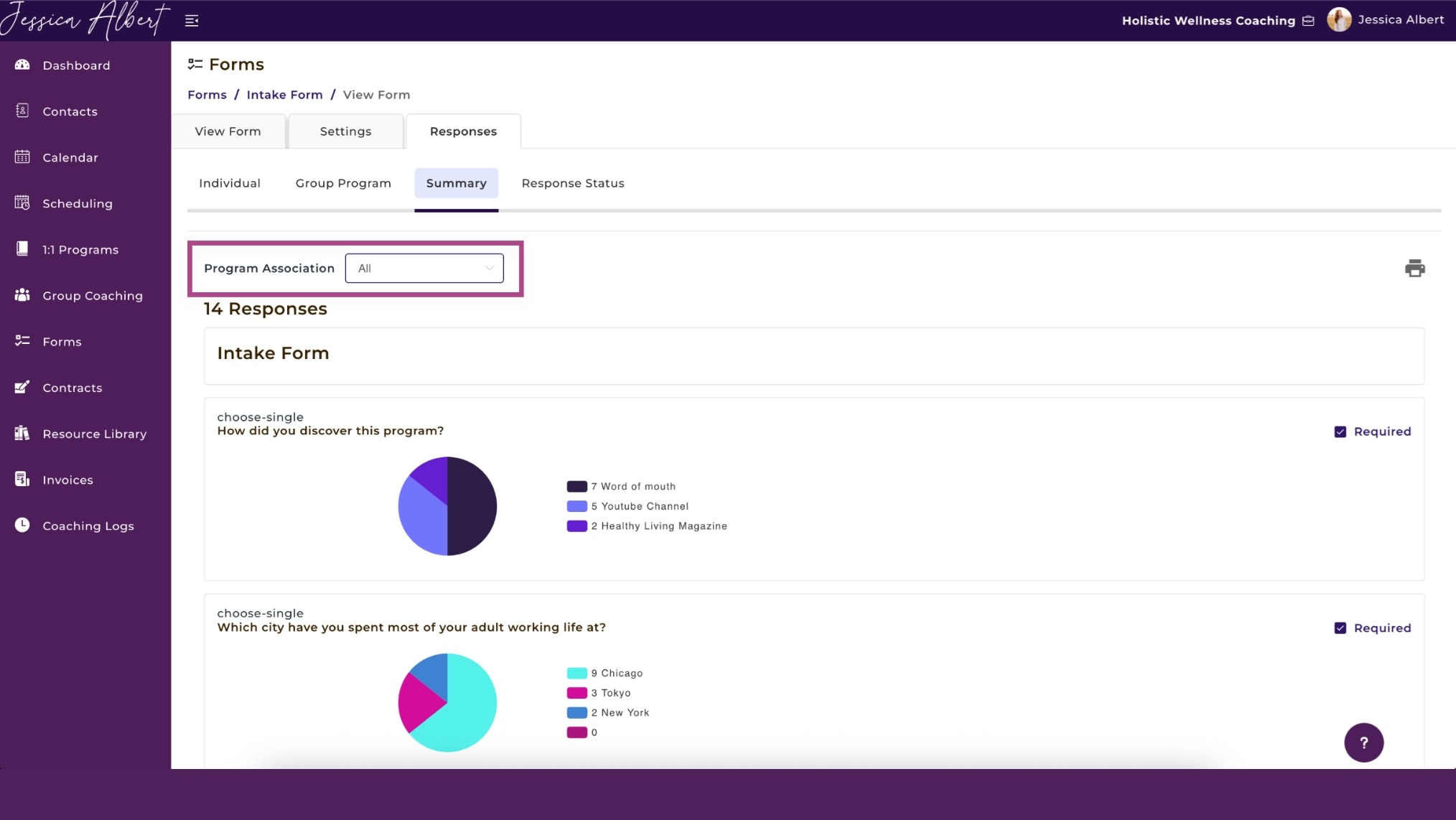
A short intake form or a 20-minute discovery call is the most practical way to gather this. Ask what they've tried before, what's still not working, and what they wish someone would just tell them. The answers will sharpen your niche, your offer, and your messaging all at once.
Step 4: Create Your Coaching Packages
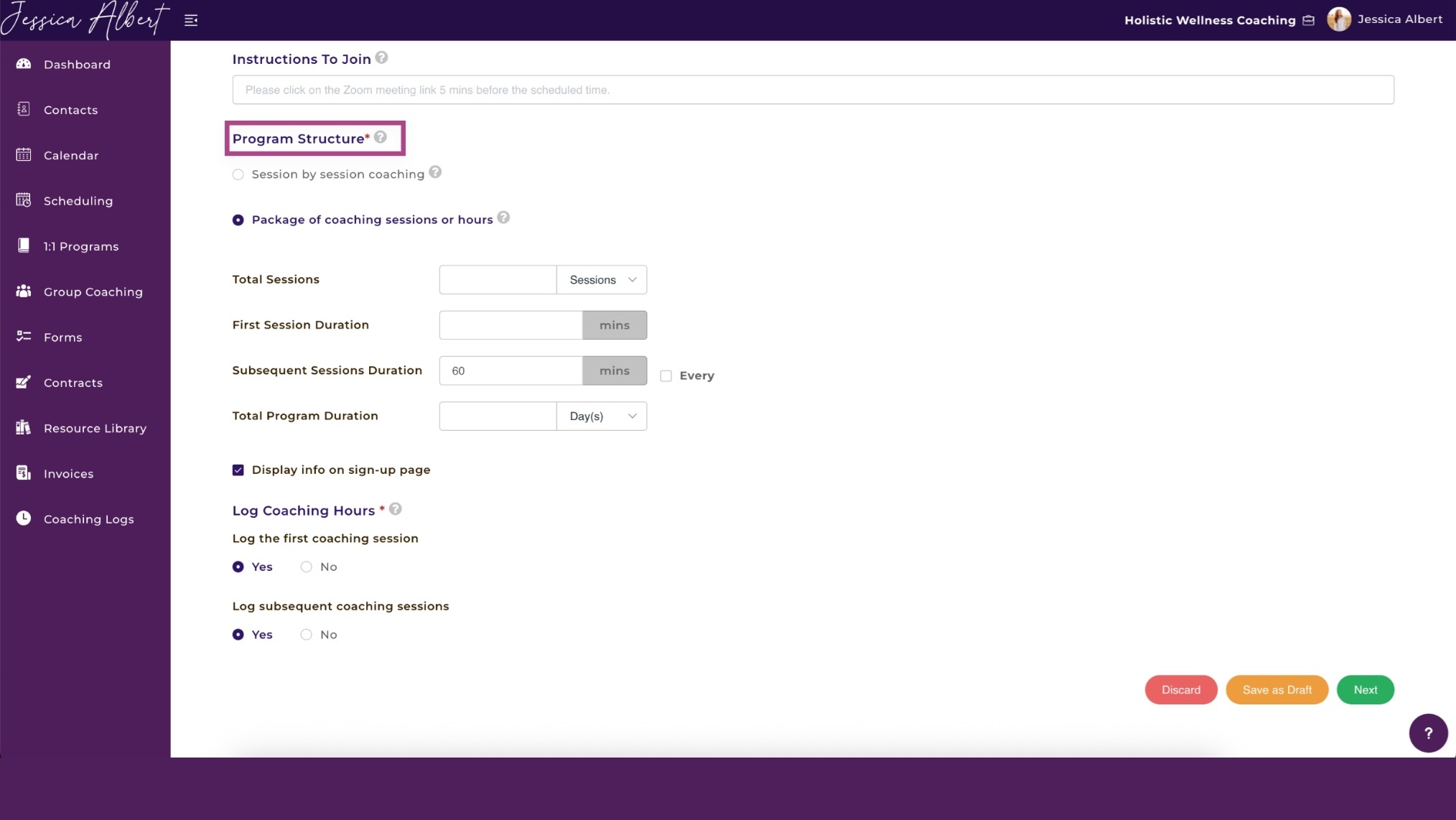
Package-based pricing beats hourly rates for one simple reason: it anchors clients to an outcome, not a clock. A typical structure might be a 3-month package with bi-weekly sessions, email support between calls, and a clear milestone at the end.
CoachVantage lets you build one-on-one coaching programs with custom sign-up pages where you can embed intake forms and contracts for e-signature.
Clients can choose from one-time payments, installment plans, or monthly subscriptions, and if someone isn't ready to commit to a package, session-by-session pay-as-you-go programs are also an option.
Step 5: Set Up Your Online Coaching Platform
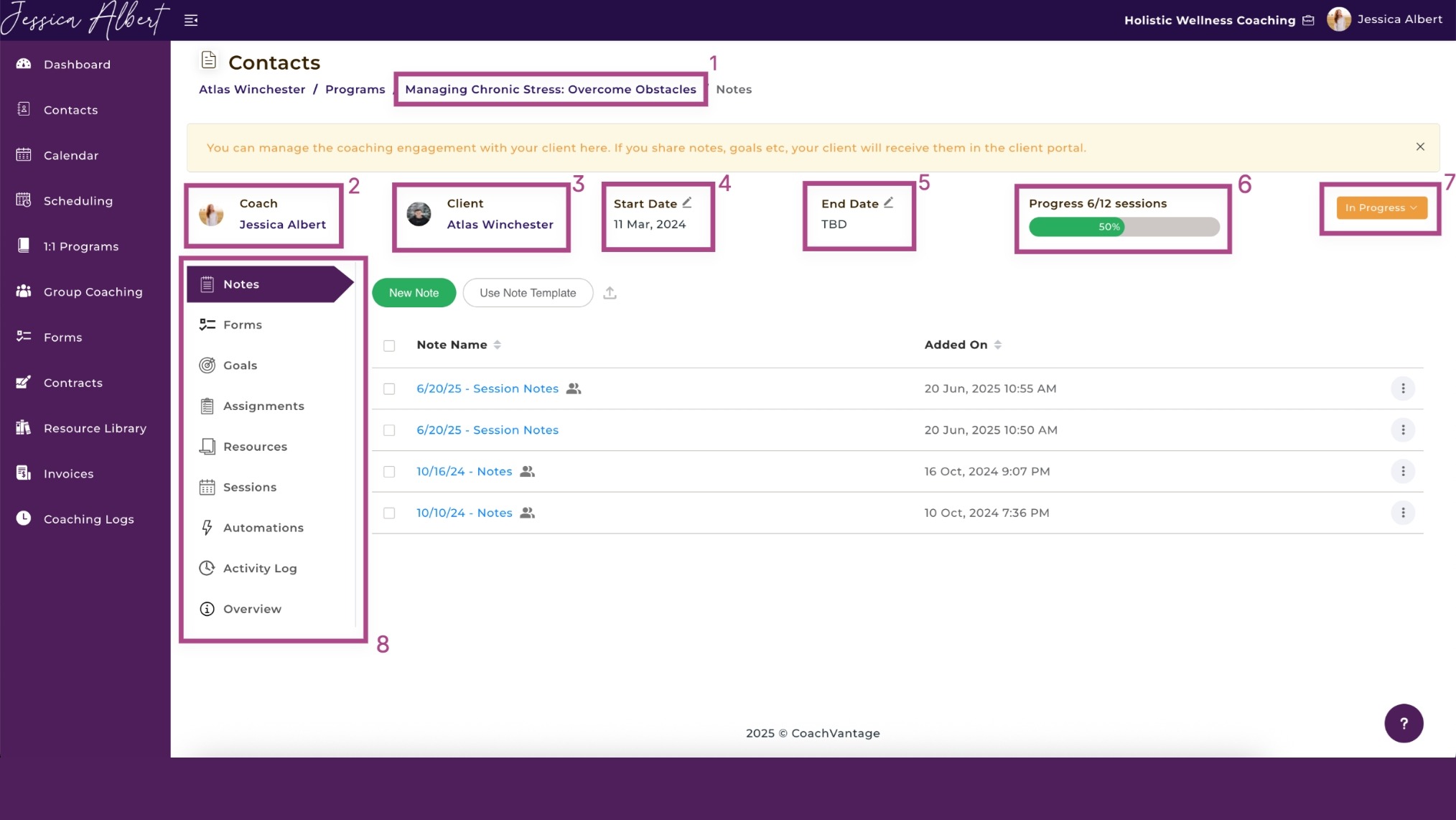
Cobbling together separate tools for scheduling, contracts, payments, and session notes creates friction for you and for clients. A dedicated coaching platform keeps everything under one roof.
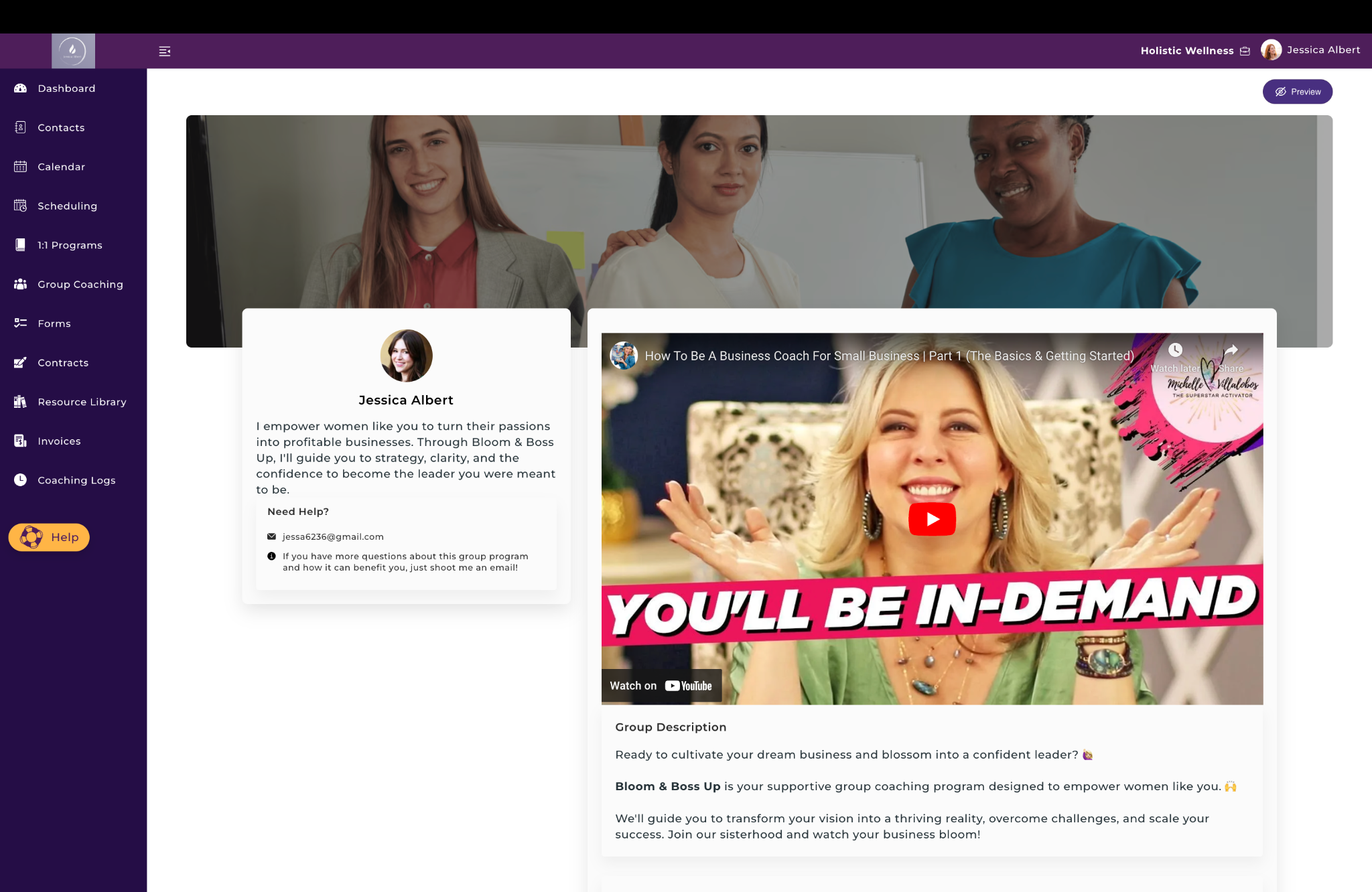
CoachVantage handles scheduling with two-way calendar sync across Google, iCloud, and Outlook so you're never double-booked. Session reminders go out automatically, and meeting times convert to your client's time zone without any manual adjustment.
Clients also get their own branded portal where they can book sessions, access shared resources, track goals, and sign contracts.
Manage Your Coaching Practice in One Place
CoachVantage automates your business workflows so you can focus on impactful coaching results.
Step 6: Sell Your Coaching Packages Online
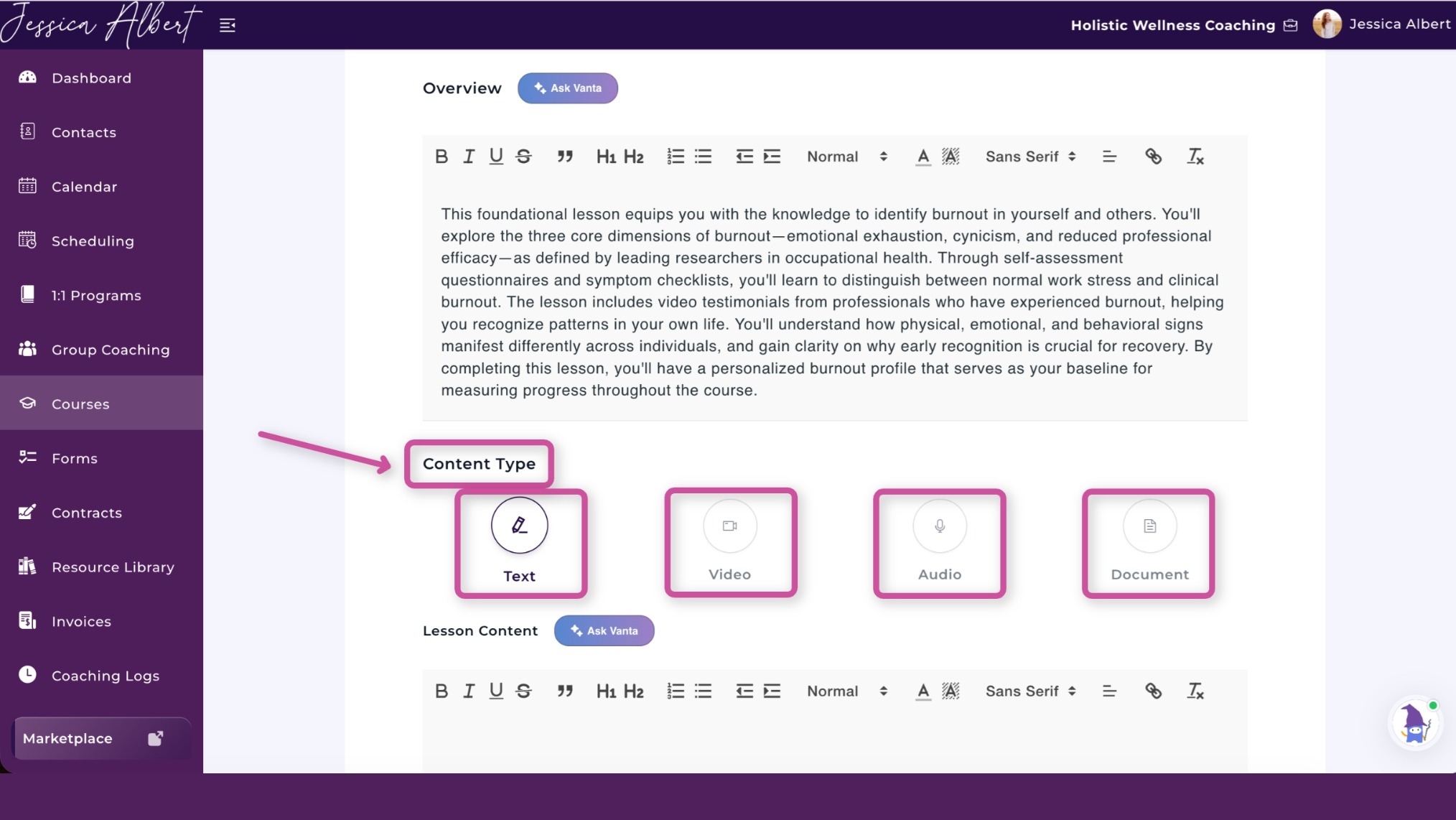
To sell, all you need is a clear offer and a frictionless way for someone to say yes.
With CoachVantage, your coaching program sign-up page works as a lightweight sales page: add a video explaining the program, show the investment, and let clients pay and enroll in one flow. For discovery calls, embed your scheduling link so prospects can book directly without back-and-forth emails.
The actual sales conversation matters more than the tech. Most coaches lose clients not because their offers are wrong, but because they lead with features rather than outcomes.
Don't open with "we'll have six sessions." Lead with what changes for the client by the end. What decision will they finally feel confident making? What pattern will they have broken? Anchor the conversation there, then explain how the program delivers it.
Step 7: Get Your First Clients
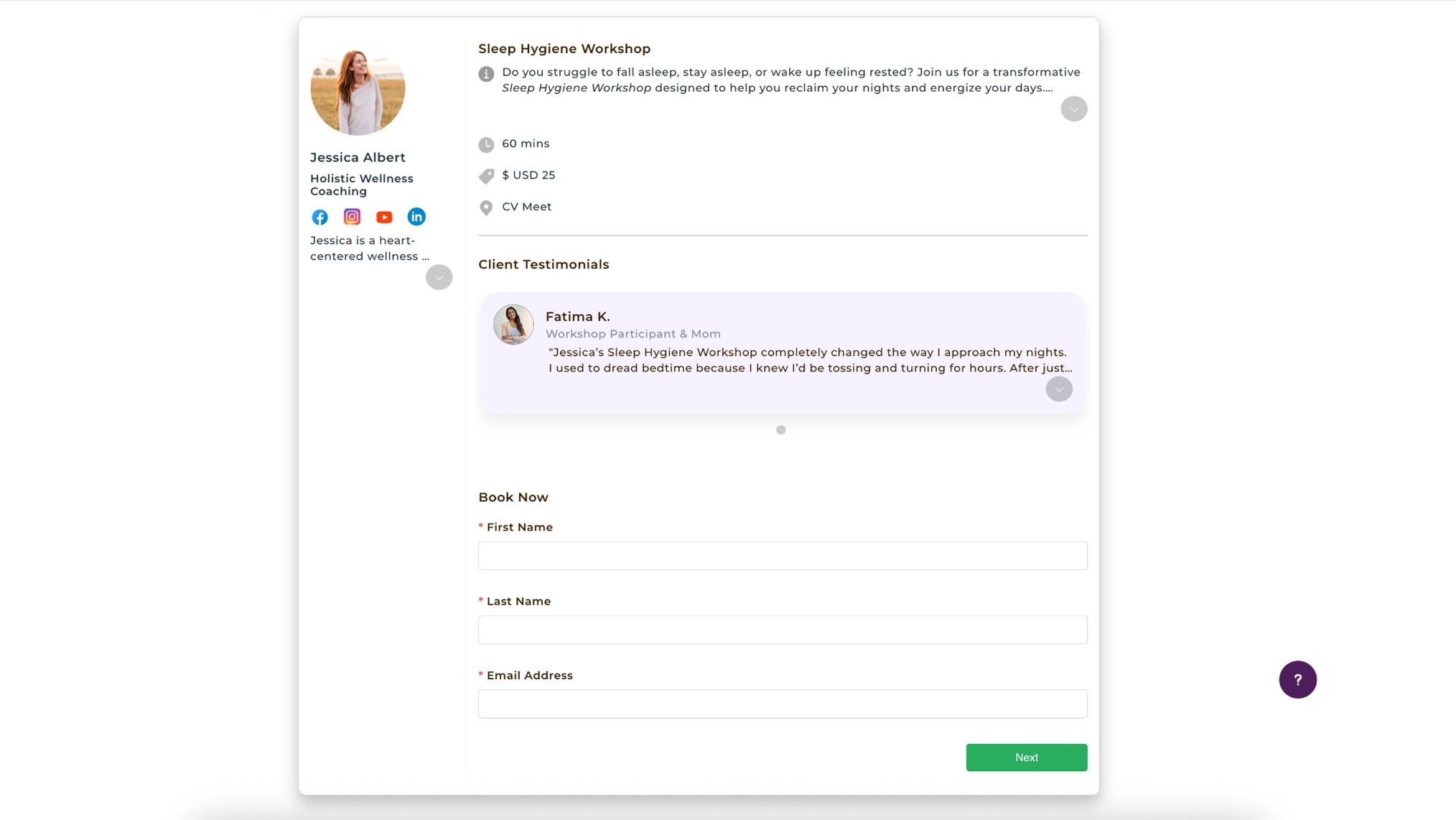
There’s a high likelihood that your first clients come from your existing network. Post about what you're doing on LinkedIn. Tell people directly. Offer a short complimentary session to two or three ideal clients and ask for honest feedback and referrals if it resonates.
Once you have a few clients, testimonials become your strongest sales asset. Ask for written or video feedback after milestone moments in the coaching relationship. Be sure to get them to talk about:
- Results achieved (quantity and quality)
- Time taken to achieve desired results
- Quality of service
- Timeliness of response
Beyond your network, consider partnering with one or two complementary service providers. A business coach and a brand designer often serve the same client at different stages. A wellness coach and a nutritionist do the same. A warm referral from a trusted peer converts far faster than any cold outreach campaign.
Step 8: Manage and Retain Your Clients
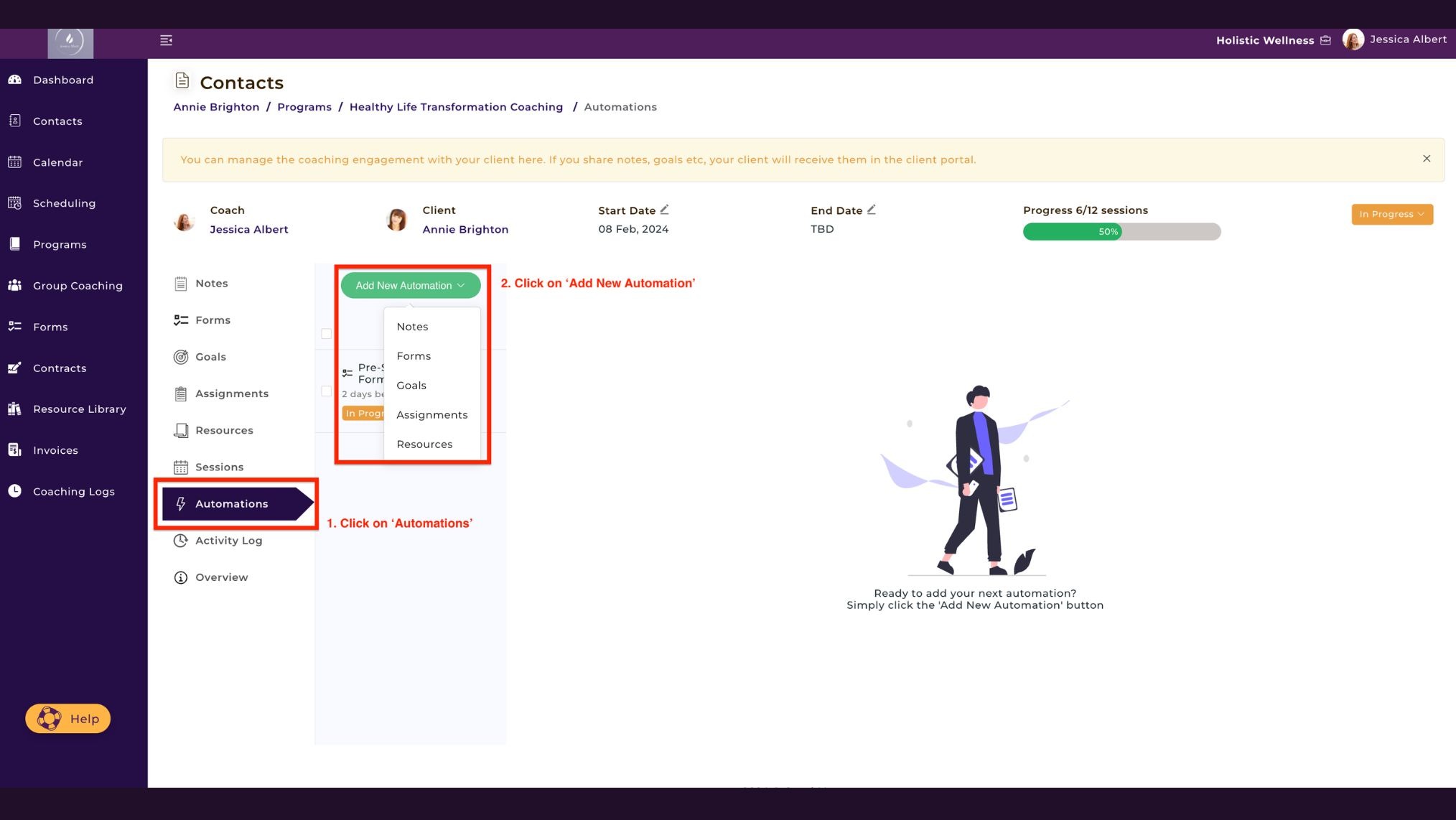
Retention is where most coaching businesses quietly fall apart. Clients who feel forgotten between sessions don't re-enroll.
What keeps them engaged is consistency: session notes they can revisit, goals they're actively tracking, and resources delivered at the right time.
CoachVantage's automation rules let you schedule the delivery of forms, assignments, goals, and files before or after specific sessions. Set it up once per client, and the system handles the rest so you can stay focused on actual coaching rather than administrative follow-up.
Step 9: Track Your Coaching Hours and Business Performance
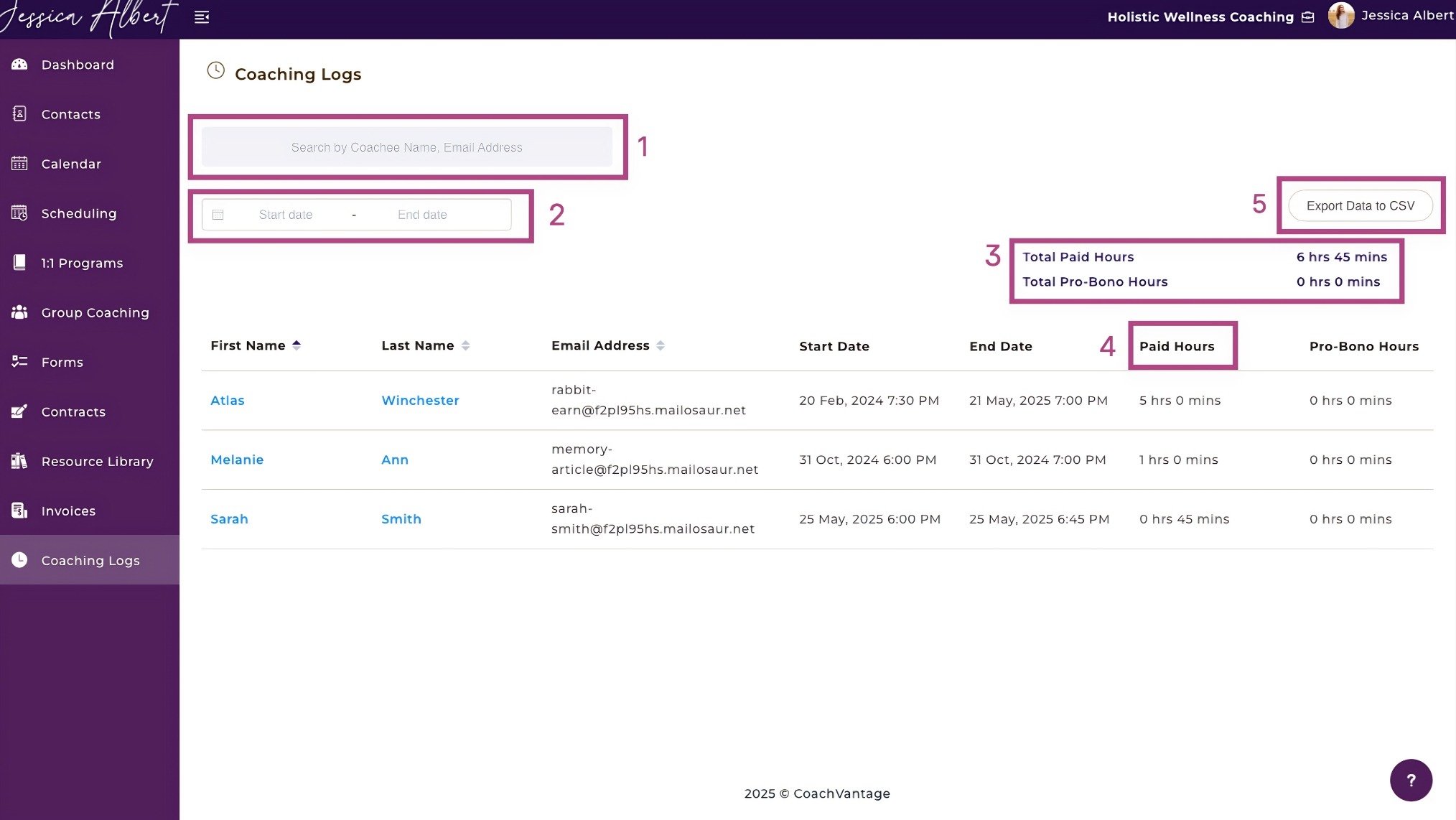
If you're working toward an ICF credential, logging coaching hours manually is tedious and easy to forget. CoachVantage automatically tracks paid and pro bono hours for every client engagement and exports the coaching log whenever you're ready to submit for certification.
Beyond certification, tracking your hours helps you understand whether your business model is actually sustainable.
If you're billing 20 hours a week at your current rate, what does your monthly revenue look like? What would it look like if you shifted some of that to group coaching or added an online course? The numbers make those decisions easier.
Step 10: Scale Your Online Coaching Business
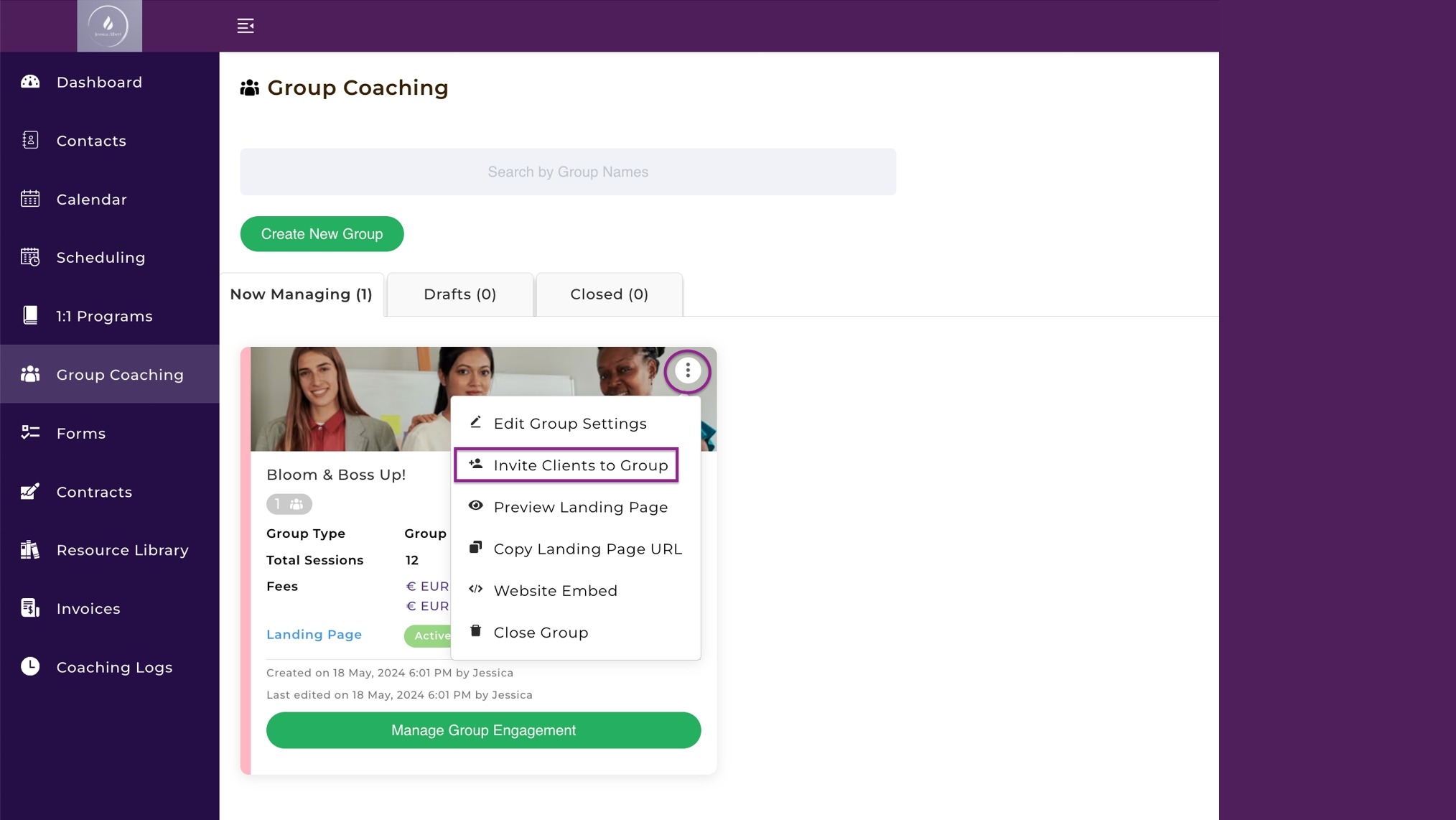
Scaling means building offers that grow revenue without proportionally increasing your time.
Group coaching programs are the most practical first step: same methodology, multiple clients per session, higher revenue per hour.
CoachVantage supports group programs with branded sign-up pages, shared resources, and the same scheduling and payment automation you'd use for one-on-one work.
When you're ready to package your expertise into a self-paced course, the platform supports online course delivery too, so your intellectual property keeps working even when you're not actively coaching.
The coaches who scale most effectively don't abandon one-on-one work entirely. They keep a small roster of high-ticket individual clients and build group or course revenue alongside it. That combination gives you both income stability and growth headroom without burning out on back-to-back sessions.
Building Your Online Coaching Business for Success
A sustainable coaching business comes down to three things: a clear niche, a client experience that earns trust, and systems that let you focus on coaching rather than logistics. Too many coaches are running their businesses across too many disconnected tools, spending energy on coordination instead of transformation.
CoachVantage brings your programs, scheduling, contracts, payments, client portal, coaching logs, and forms into one platform so nothing slips through the cracks. Try it FREE, no credit card required.
Frequently Asked Questions
Do I need a website for my coaching business?
Not at the start. A CoachVantage program sign-up page and a scheduling link can handle client enrollment without a full website. A website becomes more valuable once you're generating consistent traffic and want to build SEO visibility.
How do I sell coaching packages online?
Create a coaching program in CoachVantage, set your pricing and payment options, and share your sign-up page link. Clients can enroll, pay, and sign a contract in a single streamlined flow.
How long does it take to build an online coaching business?
Most coaches land their first paying client within 30 to 90 days of launching, depending on how actively they're networking. Building consistent $5,000 to $10,000 monthly revenue typically takes 6 to 18 months of focused effort.
How much does it cost to start an online coaching business?
The two main costs are certification training, which ranges from a few hundred to several thousand dollars, and a coaching platform. CoachVantage starts at $26 per month, billed annually, and covers everything you need to run your business from day one.
Want More Coaching Clients?

Get Your Free Guide to Create An Irresistible Lead Magnet
And attract clients who want to work with you.
Get Your Free Guide Now
Glen Oliveiro
Founder of CoachVantage
With a pulse on the coaching industry, Glen personally engaged with hundreds of coaches to develop a platform that addresses their day-to-day challenges. A visionary entrepreneur, Glen is committed to revolutionizing coaching practices through the innovative solutions offered by CoachVantage.
https://www.coachvantage.com



.png)