May 01, 2026 - Featured Coaches
Warrior Mind Coaching With Gregg Swanson
Surviving an avalanche on Mt Rainier forced this coach to reevaluate everything and focus on alignment of mind, body, emotion, and purpose
What initially drew you to coaching, and how has your own personal journey shaped your approach as a coach?
I was drawn to coaching after a pivotal moment in my life forced me to reevaluate everything. Surviving an avalanche on Mt. Rainier stripped away the illusion of control and exposed a deeper misalignment I had been ignoring.
It wasn’t just about surviving the mountain...it was about confronting how I had been operating internally.
That experience pushed me into years of studying neuroscience, performance psychology, archetypes, and identity-level transformation. Coaching became the natural extension of that evolution. My approach today is forged from that crucible.
I focus on alignment...mind, body, emotion, and purpose...because external success without internal structure eventually collapses. I don’t coach from theory alone. I coach from lived recalibration, discipline, and the belief that strength must be integrated, not performed.
Coaching, for me, is about helping others become internally unshakeable before life forces the lesson.
Do you have an established coaching business / practice and what is it called? Do you have a coaching niche that you specialize in? What is your website?
Yes, I have an established coaching practice called Warrior Mind Coach.
My niche is mental strength. By mental strength, I mean the cultivated ability to regulate your thoughts, emotions, and behavior under pressure...to stay clear, disciplined, and decisive regardless of external chaos. It’s not just positive thinking. It’s structured self-mastery. It’s the integration of resilience, emotional control, focus, and identity alignment so that performance becomes consistent rather than situational.
I primarily work with high-performing men who appear successful externally but want greater internal clarity, stability, and purpose. My work blends performance psychology, neuroscience, physical discipline, and identity-level coaching to build strength from the inside out.
I have a focus on the neuroscience of leadership, and incorporate proven and validated modalities into my coaching.
Did you get certified / accredited by any coaching schools / institutions? If so which one(s) and what attracted you to their program / accreditation?
Yes, I have pursued formal certification and accreditation as part of building a strong professional foundation for my coaching work.
I am a Certified Professional Coach (ICF), which was important to me because I wanted rigorous standards, ethical structure, and accountability in how I serve clients. I didn’t want coaching to be opinion-based — I wanted it grounded in proven frameworks and professional discipline.
In addition, I am a:
Certified Mental Performance Coach
Certified Mental Skills Coach
Certified Cognitive Behavioral Coach
Certified NLP Practitioner
Certified Lifestyle Fitness Coach
I was drawn to programs that emphasized performance psychology, behavioral change, and practical application. My focus has always been integration...combining cognitive science, mental conditioning, and physical discipline into a cohesive system.
Certifications gave me structure. Experience gave me depth. Together, they allow me to coach from both credibility and lived understanding.
How did you set up your coaching practice and what challenges / wins have you encountered in the process? Any tips for new coaches just starting out to get their business registered?
I started simply.
The first step was registering my domain name. That was it. No complex funnel, no elaborate launch strategy, just planting a digital flag.
Later, as the practice grew and the direction became clearer, I formed an LLC to formalize the business structure and protect the brand.
The biggest challenge early on was visibility. When I began, social media wasn’t the engine it is today. Growth required consistent networking, relationship-building, and investing in pay-per-clicks (PPC) to get in front of the right audience. It was steady, deliberate work...not overnight traction.
One of the biggest wins wasn’t revenue, it was conversations. Speaking with prospective clients and realizing the message resonated. Seeing people respond to the work confirmed that the foundation was solid.
For new coaches, my advice is simple: register your name as your domain. It gives you long-term flexibility. Your niche may evolve. Your offers may shift. But your name becomes the constant anchor you build around.
What online tools / applications / platforms do you use to stay focused and streamlined in managing your practice, especially if your a solo / small business owner without a big budget for expenses?
As a solo business owner, I’ve learned that focus comes from simplicity, not stacking endless software.
For content creation, ChatGPT has been a game changer, especially after customizing it to reflect my voice and frameworks. It gives me roughly 80% of the structure for articles, newsletters, and scripts, which I then refine and elevate. It also helps generate clear summaries of coaching calls that I send to clients, which saves significant time.
I use Canva for graphics, Camtasia for recording and editing training content, and Fliki when I need streamlined video/audio creation.
My philosophy is simple: use tools that amplify clarity and execution, not complexity.
How do you typically acquire clients / market yourself to grow your business? What has worked best for you and what pitfalls should be avoided?
Most of my clients have come from two primary sources: my podcast and referrals.What's the most transformative shift you've witnessed in a client thanks to your coaching? Can you share the specific approach or tools you used? For eg, do you use any coaching models or specific techniques?
The most transformative shifts I’ve witnessed are rarely dramatic “aha” explosions. They’re gradual recalibrations. Most clients don’t change in a single breakthrough moment. They change because of sustained reflection, honest confrontation, and better questions over time.
I preframe this early: it took your entire life to build the current patterns; we’re not dismantling them in three sessions.
That expectation alone relaxes clients and creates space for real work instead of rushed fixes. The core of my approach is inquiry. Deep, layered questions that expose limiting beliefs and unconscious narratives.
I also use structured tools such as Values Assessments, Archetype and Enneagram assessments, and occasionally a Virtues assessment to help clients see their operating system clearly.
During sessions, I draw heavily from NLP, cognitive behavioral coaching, and mental toughness frameworks to help reframe distorted thinking and build psychological resilience.
The real transformation isn’t flashy. It’s when a client begins responding to pressure differently...with clarity instead of reactivity. That’s when identity shifts.
Describe a moment where you encountered a coaching roadblock with a client. How did you navigate it, and what lessons did you learn for future situations?
A common roadblock I encounter is external blame.
Many clients initially arrive convinced their frustration, stress, or stagnation is caused by a boss, partner, colleague, or circumstance. And to be fair, those external factors are often real. The challenge isn’t denying reality...it’s examining agency.
When progress stalls, I gently but directly shift the focus inward. We explore where they are choosing to place attention, choosing to interpret events a certain way, and choosing the story they’re telling themselves. That reframing can feel uncomfortable at first. But when it clicks, it’s powerful.
They realize they’ve been outsourcing their authority. They’ve been reacting instead of deciding. And in that moment, they understand something fundamental: if they are choosing the meaning, they can also choose differently.
The lesson for me has been patience and precision. You can’t force that shift. But when a client truly sees where they’ve given away power, they’re ready to reclaim it.
What are some common limiting beliefs you encounter in your clients, and how do you help them overcome them?
Three limiting beliefs show up repeatedly in my work.
Manage Your Coaching Practice in One Place
CoachVantage automates your business workflows so you can focus on impactful coaching results.
The first is inadequacy: “I’m not good enough.”
The second is helplessness: “I can’t change my situation.”
The third is fear of failure or rejection: “If I try and fall short, it will confirm my worst fear.”
These beliefs often operate quietly beneath achievement. On the surface, the client may be successful. Underneath, they’re driven by self-doubt or avoidance.
My approach is not motivational. It’s evidential. We examine the story and then look for objective proof.
Where have you already demonstrated capability? Where have you changed circumstances before? Where have you survived failure and grown stronger?
When clients are guided to uncover their own counter-evidence, the belief weakens. It’s not about blind optimism. It’s about restructuring perception based on facts rather than inherited narratives.
Once they see the distortion clearly, they stop operating from it — and that’s when behavior begins to shift.
How do you maintain your own self-care and emotional well-being while supporting others through theirs?
Supporting others requires structure on my end.
I’m intentional about boundaries. My schedule includes non-negotiable time for training, lunch, and even the occasional nap.
Physical discipline isn’t optional for me, it’s maintenance. If I’m not clear and regulated, I can’t expect my clients to be.
I also have strong personal support. I’m fortunate to have a partner I can speak openly with, which keeps perspective grounded and balanced.
And I hire a coach myself. That’s important. Coaching isn’t something I believe others need...it’s something I value personally. Having someone challenge my blind spots keeps me sharp and prevents drift.
Self-care, for me, isn’t indulgence. It’s responsibility. If I’m asking clients to show up fully, I have to model that standard first.
Fun question... If a magic genie suddenly appeared in front of you and granted 3 wishes, what would you wish for to have a fulfilling career as a coach?
If a magic genie showed up and offered three wishes for a fulfilling coaching career, they’d be surprisingly practical.
First, I’d wish for intelligent leverage - the ability to multiply my impact through other aligned coaches who are trained in my frameworks and values. Not to dilute the work, but to expand it without sacrificing depth.
Second, I’d want multiple high-impact online training programs that genuinely transform people who may not be able to afford one-to-one coaching. Scalable access without lowering standards.
And third, I’d choose a small group of committed long-term clients - individuals who stay in the work year after year, refining, evolving, and building something meaningful over time.
For me, fulfillment isn’t volume. It’s depth, reach, and sustained transformation.
This is your blank canvas for you to write about anything you want to share that's helped you in your coaching journey, how to be a more effective coach, etc. Feel free to tell your story to inspire our coaching community!
I wasn’t supposed to survive that mountain.
Most people see an avalanche on a documentary and think, “Wow, that’s intense.”
I saw one up close — close enough to feel the mountain inhale before it spat its fury in my direction.
Mt. Rainier. Several years ago.
A climb that started like any other… until the ground cracked, the snow fractured, and the world roared like a freight train hunting for a soul to take.
That day didn’t just knock me down — it stripped me bare.
Everything I thought I was — strong, prepared, untouchable — evaporated in seconds.
And in the silence that followed the chaos, when I realized I was somehow still alive, a truth hit harder than the avalanche itself: I’d been living like a passenger in my own life.
Strong on the outside. But misaligned on the inside.
The world saw discipline, confidence, achievement.
What they didn’t see was the internal drift — the silent erosion that comes from living out of sync with your values, your purpose, and your truth.
The avalanche didn’t break me. It revealed me.
It showed me I had spent years building a life with all the external markers of success… but very few of the internal markers of alignment.
That moment on the mountain became the dividing line of my life.
Before: Pushing. Grinding. Proving.
Letting approval, productivity, and perfection drive the ship.
Ignoring the subtle signals of burnout and the emotional cost of “just powering through.”
After: Choosing presence over pressure. Purpose over performance. Alignment over achievement for its own sake.
It led me into deep study: Neuroscience. Performance psychology. Human potential. The four warrior archetypes.
NLP, breathwork, spiritual frameworks, martial arts, CrossFit discipline, and years of personal experimentation.
But more importantly — it forced me to confront my truth: If I wanted to live fully, I had to lead myself first.
And eventually… help others do the same.
Today, it's everything I teach — mental strength, emotional agility, spiritual alignment.
Want More Coaching Clients?

Get Your Free Guide to Create An Irresistible Lead Magnet
And attract clients who want to work with you.
Get Your Free Guide Now
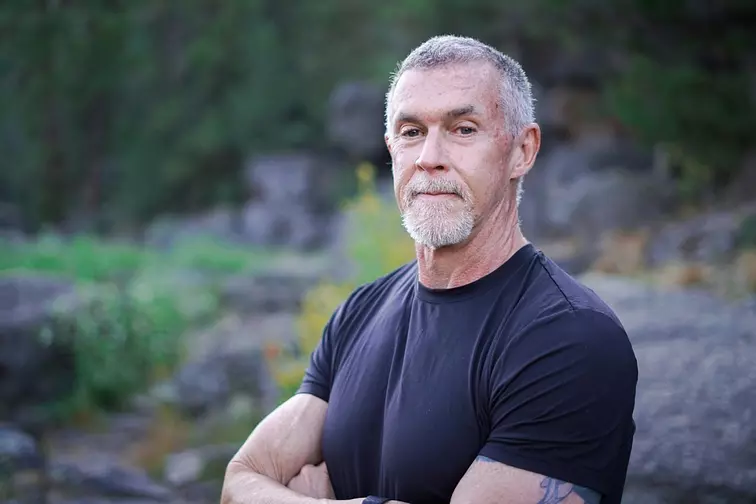
Gregg Swanson
Coach at Warrior Mind Coaching
Gregg is a Mental Strengths coach. He has several coaching certifications including Certified Mental Performance Coach, Certified Mental Skills Coach, and Certified Cognitive Behavioral Coach, to name a few. Gregg works primarily with high-performing men who appear successful externally but want greater internal clarity, stability, and purpose.